In brief
Following a test flight mishap where SpaceX's Starship exploded over the Caribbean, the US has grounded the rocket for an investigation by the FAA. The regulatory body is analyzing potential damage to property and the cause of the failure before allowing future flights.
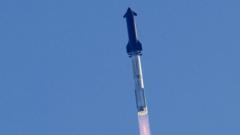
The US Federal Aviation Administration (FAA) has grounded SpaceX's Starship rocket after it exploded during its latest test flight, which saw the upper stage disintegrate over the Caribbean shortly after launch from Texas on Thursday. The incident led to alterations in airline flights to avoid falling debris, and the FAA is collaborating with SpaceX and local authorities to determine the extent of damage, particularly in the Turks and Caicos Islands, although no injuries have been reported.Elon Musk’s SpaceX has been instructed to conduct a “mishap” investigation as the FAA reviews the results to assess whether Starship can resume flight operations. The FAA established a “debris response area” during and after the incident, temporarily rerouting aircraft around the substantial debris field and causing several to divert due to low fuel levels.The Starship rocket is touted as the most robust and powerful rocket yet, playing a critical role in Musk’s plans to colonize Mars. This test launch marked the seventh mission for Starship, featuring a new taller upper stage deemed a “new generation ship” with key upgrades. The upper stage was designed for a controlled splashdown in the Indian Ocean approximately an hour post-launch. The Starship lifted off at 17:38 EST (22:38 GMT), successfully separating from its Super Heavy booster nearly four minutes into the flight. However, during a live stream, SpaceX’s communications manager, Dan Huot, mentioned that teams had lost contact with the upper stage. The Super Heavy booster successfully returned to its launchpad roughly seven minutes after liftoff, eliciting applause from the control team.Later, SpaceX confirmed that the upper stage experienced “rapid unscheduled disassembly,” leading Musk to share on social media that initial assessments pointed to an “oxygen/fuel leak” as the cause of the explosion. Despite the setback, Musk expressed optimism that the next launch could occur as soon as next month.The combined Starship spacecraft and Super Heavy rocket stands at 123 meters (403 feet) tall, with potential applications extending to NASA’s Artemis missions for lunar exploration and, in Musk's vision, future endeavors for human travel to Mars—aiming to transform long-haul space transport.In a competitive landscape, the Starship test flight coincided with the inaugural flight of the Blue Origin New Glenn rocket system, reflecting the fierce rivalry between Musk and Jeff Bezos as they vie for supremacy in the commercial space vehicle market.