In brief
Farmers in the volcanic highlands of Kenya are facing severe threats to their livelihoods as climate change disrupts traditional farming practices, leading to dwindling coffee production and increased costs.
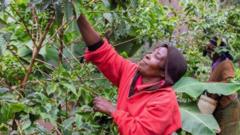
In the heart of Kenya's Rift Valley, the lush volcanic soils have long nurtured the celebrated coffee crops that have earned a global reputation. Farmers like Simon Macharia are dedicated to cultivating the prized Kenya AA coffee beans, known for their rich flavors and aromas. However, the future of this industry is now perilously hanging in the balance, mainly due to the alarming impact of climate change.Mr. Macharia, who manages a small 2.5-hectare (six-acre) farm, pours his heart and soul into the painstaking processes of picking, pruning, and transporting coffee cherries to local processing facilities. These bright red cherries eventually yield some of the most sought-after beans for coffee houses across Europe. Unfortunately, the farmers are grappling with increasing pressure as changing weather patterns, rising temperatures, and inadequate rainfall threaten their once-reliable crop."Climate change is a major challenge for our coffee farmers," asserts John Murigi, chairman of the Komothai Coffee Society, which encompasses around 8,000 farmers. The erratic climatic conditions have led to decreased coffee production in recent years, prompting the emergence of pests and diseases that pose dire threats to the crops. Coffee leaf miners and coffee berry disease are wreaking havoc on the delicate plants, forcing farmers to resort to harsh chemical treatments that could linger toxic effects on the environment and their health.Despite the labor-intensive nature of coffee farming, which can consume an immense amount of water—up to 140 liters to produce a single cup—the farmers are facing severe water shortages. The ongoing drought and erratic rainfall patterns have diminished river levels, leading to increased competition for the already limited water resources in the region. Farmer Joseph Kimani laments, "the river levels have gone down a lot," further complicating their struggle for sustainability.The coffee community in Kenya, providing employment for about 150,000 individuals, potentially risks declining under the weight of these formidable challenges. A Fairtrade International survey exposed that an astonishing 93% of Kenyan coffee farmers have already begun feeling the brunt of climate change repercussions.To adapt, farmers are initiating climate resilience programs, such as planting trees to provide shade for coffee plants and reduce reliance on water resources. Yet, despite these efforts, the pessimism runs deep among growers like Mr. Macharia, who fears that "right now, as things stand, I don't think any parent wants their child here farming coffee."As the global coffee industry wrestles with the implications of climate change, the fate of Kenyan coffee farmers hangs in a delicate balance. Addressing both the economic and environmental hurdles they face could ultimately shape the future of this beloved industry.