In brief
The aftermath of the recent earthquake in Mandalay has left many survivors grappling with loss and fear. Reports indicate a severe lack of timely aid and rescue efforts, with the military government struggling to provide assistance amidst ongoing conflicts.
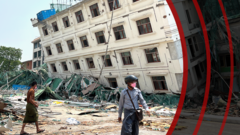
Driving into Mandalay, the devastation wrought by last Friday's earthquake unveils itself starkly. Every corner reveals collapsed buildings, particularly in the northern and central districts, with rubble strewn across streets. Most structures bear visible cracks, leaving them unsafe for entry. The main hospital struggles to care for patients outdoors due to damage from the earthquake.Due to restrictions imposed by Myanmar's military government, foreign journalists face barriers in reporting the disaster and must operate covertly. We encountered a populace desperate for help amid the chaos. "I hope he’s alive, even if it’s a small chance," lamented 41-year-old Nan Sin Hein, who has been waiting for days outside a collapsed five-storey building. Her 21-year-old son, a construction worker, is among those still trapped within.The earthquake, measuring 7.7, caused significant structural failure; at the building location, rescue efforts seem nonexistent. Amidst a backdrop of civil unrest in Myanmar, where approximately 3.5 million people are displaced, the military continues its operations against insurgents, hampering effective relief.Despite a rare request for international aid from the junta, foreign relations remain strained, leading to limited assistance primarily from neighboring countries such as India and China. The focus is on major sites where many are believed trapped. Neeraj Singh, of the Indian disaster response team, noted the complexity of recovery at the U Hla Thein Buddhist academy where many students perished.Facing extreme heat, teams work tirelessly to retrieve bodies, but conditions make the task nearly impossible. Families watch with dread on the sidelines, hoping for news of their loved ones. Among those grieving is U Hla Aung, whose son was a student at the academy. "I'm inconsolable," he expressed through tears.Many historical landmarks, including the Maha Muni Pagoda, have also sustained severe damage. The citizens remain hesitant to speak with outsiders, fearful of the authorities. Makeshift funeral rites take place outside destroyed homes, showcasing the community's raw pain.Survivors, many displaced and stressed, now sleep outdoors. "I ran out, but my house is gone,” said 72-year-old Daw Khin Saw Myint, who now lives under a tree next to a refuse pile. The influx of people without homes creates immense demand for aid, but supplies remain limited, often arriving via small donations, leading to desperate chaos when distributions occur.The hospitals are also overwhelmed, providing makeshift care, as family members attempt to assist the injured while nurses and doctors are in minimal supply. As the window for potential rescues narrows, many victims are now being brought in deceased.For a heartbroken Nan Sin Hein, finding closure is vital, even through tragedy. "I just want to see my son’s face, even if deceased," she said, her anguish palpable, mirroring the collective grief of a city in turmoil and fear, amidst the realities of a relentless disaster.