In brief
As Haiti teeters on the brink of collapse due to rampant gang violence, families like Venda's face devastating choices. With her two-year-old daughter suffering from acute malnutrition, the struggle for survival in Port-au-Prince illustrates the dire humanitarian situation, exacerbated by a lack of government stability and law enforcement.
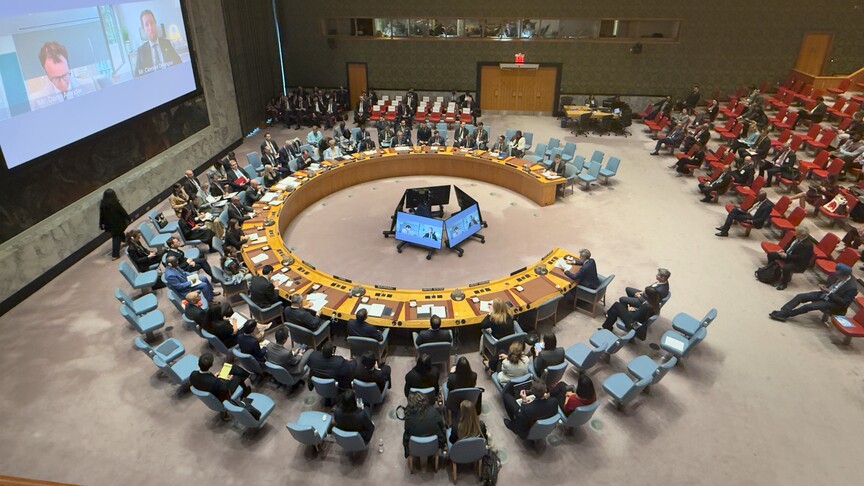
In the heart of Haiti’s chaotic landscape, two-year-old Shaina lies on an intravenous drip at one of the few hospitals still functioning in Port-au-Prince. Her mother, Venda, is desperate as she hopes the medical treatment will save her emaciated child from the grips of acute malnutrition. Shaina is just one of the 760,000 Haitian children teetering on the edge of famine, a grim reality worsened by the rampant gang violence that has enveloped the nation since the 2021 assassination of President Jovenel Moïse. Venda's fears had kept her homebound for weeks, too terrified to step outside as gangs fought for control of the streets. Now at the hospital, her voice trembles with the weight of her emotional struggle, “I want to get proper care for my child, I don't want to lose her.” The gang warfare has turned vast stretches of Port-au-Prince into no-go zones, with an estimated 85% of the capital now under gang dominance. The violence has become increasingly lethal, with the UN reporting over 5,000 deaths this year alone. Even hospitals, places meant for healing, are not immune; gunfire erupted in an emergency ward as police clashed with gang members just the previous day. Pierre, a young man nursing a gunshot wound to his shoulder, shares his close encounter with death: caught in a gang crossfire while heading home from work. He reflects on the conditions that drive youth to gangs, calling for better government programs to redirect their energy positively.In response to the growing violence, the UN Security Council initiated a Multinational Security Support Mission (MSS) in October 2023. Primarily funded by the US and led by Kenyan forces, the deployment aimed to restore order amidst the chaos. Patrols through downtown Port-au-Prince reveal deserted streets, once vibrant but now marked by boarded-up shops and blockaded roads.A recent patrol illustrates the danger that looms. Under fire as they maneuver through improvised barricades, Kenyan police return fire with precision. The scene serves as a grim reminder of the lawlessness that has forced four hundred officers from Kenya to operate in desperate conditions, significantly outnumbered against an estimated 12,000 armed gang members.Commander Godfrey Otunge remains hopeful even in the face of adversity, asserting that local support for the MSS is strong and that the mission will expand as necessary. Yet, the realities on the ground are daunting, with critical areas still wholly under gang control.Port-au-Prince is a landscape of despair, with around 100 gangs operating openly, preying on civilians and manipulating the youth into their ranks. In a stark illustration of the violence, one infamous gang leader, Ti Lapli, of the Gran Ravine gang, commands over 1,000 men, justifying their brutal actions by citing the lack of economic opportunity as a driving force.As the lives of countless families unravel in the grip of fear, vulnerable residents like Negociant—her family once safely housed—now crowd into schools repurposed as shelters, constantly on the run to escape the terror that has engulfed their neighborhoods. “Today, again, I'm on the run to save my life and my children," she laments, a palpable sense of urgency underscoring the fragile reality for so many in Haiti.