In brief
After months of conflict, Khartoum sees the arrival of its first food aid convoy, bringing much-needed supplies amid a dire humanitarian crisis.
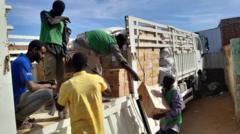
The capital city of Sudan, Khartoum, received its first aid convoy since the onset of civil war in April 2023, marking a significant milestone in the ongoing humanitarian crisis. The United Nations has classified the situation in Sudan as the "world's worst hunger crisis," with rising tensions between the military and the paramilitary Rapid Support Forces (RSF) exacerbating the plight of civilians. On Thursday, 28 trucks laden with essential food and health supplies reached South Khartoum, bringing a glimmer of hope to a beleaguered population. Duaa Tariq, a humanitarian worker associated with the Emergency Response Rooms, expressed the emotional moment as "tears of laughter and joy," symbolizing the struggle and efforts made to facilitate the delivery. Despite notable challenges posed by security threats and roadblocks, UN agencies and Sudanese community groups successfully negotiated with both the army and RSF to allow the convoy's passage. UNICEF contributed five trucks in this operation, providing crucial supplies to health facilities, including Al Bashayer Hospital."This aid is desperately needed. We have been waiting for it and exploring numerous alternative delivery methods," Tariq stated. "The only way to mitigate the famine effects in Khartoum right now is by receiving this aid.”An independent panel of food security experts recently reported that Sudan faces a "widening famine crisis," with nearly half the population — approximately 24.6 million people — urgently requiring food assistance. The ongoing conflict, which has resulted in a staggering estimated loss of 150,000 lives and displaced over 11 million individuals, continues to hinder recovery efforts.Efforts to mediate peace between the army and RSF have repeatedly faltered, leaving civilians in a perilous situation. As Khartoum begins to receive this vital aid, it serves as a reminder of the deepening humanitarian needs that persist amidst the fighting.