In brief
The brutal killing of Muhsin Hendricks, South Africa’s first openly gay imam, has cast a shadow of fear and reflection among the LGBTQ+ community, while underscoring the ongoing struggle for acceptance within religious circles and societal support.
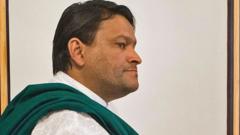
The assassination of Muhsin Hendricks, an openly gay imam in South Africa, has sent ripples of fear through the LGBTQ+ community while fueling determination to challenge ongoing religious and social marginalization. Hendricks, beloved as a "gentle spirit" by Reverend Toni Kruger-Ayebazibwe, was shot dead in Gqeberha under suspicious circumstances that some believe were retaliatory due to his progressive stance within Islam. At the age of 57, Hendricks was reportedly in Gqeberha to officiate at the marriages of two interfaith heterosexual couples, as his foundation clarified, pushing boundaries in a traditional space where interfaith unions are often frowned upon. His efforts to promote inclusivity among the faith have marked him as a trailblazer; in 1996, he came out as gay and later married a Hindu man, successfully establishing The Inner Circle, a support group for queer Muslims.In a country that legalized same-sex marriage in 2006 and adopted a constitution protective of sexual orientation discrimination, Hendricks was simultaneously celebrated and ostracized within religious communities. The Muslim Judicial Council (MJC) and the United Ulama Council of South Africa (UUCSA) publicly condemned his killing but often referred to him without the honorifics tied to his faith due to their conservative view on same-sex relationships.Despite the presence of a vibrant LGBTQ+ community, members often confront stigmatization and violence in religious spheres, where most groups resist acknowledging same-sex partnerships. Innovations in policies from a few religious institutions, such as the Dutch Reformed Church and the Methodist Church, indicate slow progress but highlight deeply rooted conservatism that remains pervasive in many faith communities.While some religious leaders lament the hateful rhetoric amplified on social media following Hendricks' death, they acknowledge the necessity to continue fighting for acceptance. The tragedy threatens to silence voices within the community but has also galvanized LGBTQ+ advocates to reassess security measures without surrendering to fear.Hendricks has been buried in a private ceremony. However, his foundation promises a memorial service to celebrate his significant impact on the LGBTQ+ community. As Teboho Klaas from The Other Foundation aptly remarked, Hendricks' life may have been truncated by violence, but his legacy as a symbol of hope and acceptance for queer Muslims continues to resonate.