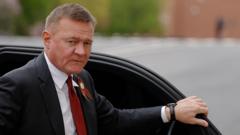
In a startling turn of events this week, Roman Starovoit, Russia's ousted transport minister, was found dead in a Moscow park just hours after President Vladimir Putin removed him from his post. Discovered with a gunshot wound to the head and a pistol nearby, authorities are treating the incident as a possible suicide, marking a rare and tragic occurrence in modern Russian governance.
The Moscow-based tabloid, Moskovsky Komsomolets, expressed shock at this unprecedented situation, drawing parallels to the past when government officials resorted to similar extremes. The last time a Russian official reportedly took their own life was over three decades ago during the chaotic days leading to the Soviet Union's dissolution, an event that underlines the staggering nature of Starovoit's death.
Kremlin spokesman Dmitry Peskov acknowledged the profound impact of Starovoit's death on the nation, suggesting that "normal people cannot but be shocked by this." While the Kremlin remains tight-lipped about the investigation, the media is rife with speculation. Notably, several reports connect Starovoit’s death to developments in the Kursk region, where he served as governor before his ministerial appointment. Under his leadership, large government investments were funneled into constructing defenses along the border with Ukraine, only to be undermined by recent Ukrainian advances.
As investigations unfold, it has been suggested that the ongoing legal scrutiny surrounding these failed projects may have put Starovoit in jeopardy, potentially positioning him as a key figure in impending fraud cases that could carry severe penalties.
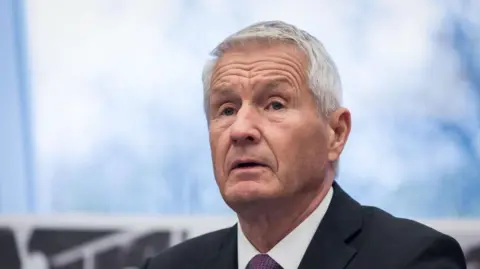
Nina Khrushcheva, an international affairs professor at The New School in New York, draws disturbing analogies, citing historical instances of officials committing suicide during oppressive regimes. "He must have feared that he would receive tens of years in prison if he was going to be under investigation," she remarked, highlighting the dire state of affairs for political figures in Russia today.
Despite the gravity of these events making headlines in print, state television's coverage has been decidedly muted. The main evening news on Russia-1 devoted scant attention to Starovoit’s demise, only briefly acknowledging his death after discussing his successor—a strategic omission that reflects the Kremlin’s cautious approach to managing public sentiment.
For the broader political elite in Russia, Starovoit’s tragic end serves as a stark warning about the potential consequences of navigating the current political landscape. Khrushcheva noted that unlike in previous years, where career advancement flourished, today's realities illustrate a looming threat over officials at all levels, suggesting that political survival could very well hinge on compliance with an increasingly unforgiving regime.
As the political atmosphere grows increasingly tense, the ramifications of Starovoit's death may extend far beyond one individual, sending ripples of anxiety through the ranks of Russia's political class.