In brief
China's decision to send Vice-President Han Zheng to the inauguration of U.S. President-elect Donald Trump marks a significant diplomatic gesture amid tensions between the two nations.
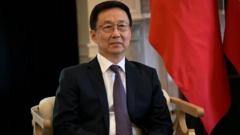
In an unprecedented move, China has chosen to send Vice-President Han Zheng to attend the inauguration of U.S. President-elect Donald Trump on January 20, 2025. This marks the first time a senior Chinese official will witness the swearing-in of an American president. Trump's invitation to Chinese President Xi Jinping and other global leaders breaks tradition, as foreign dignitaries typically refrain from attending presidential inaugurations. The Chinese government has expressed a desire to collaborate with the new U.S. administration to establish cooperative relations moving forward.However, as China prepares for a Trump presidency, concerns loom regarding potential tariffs on Chinese imports and escalating tensions, with Trump’s Secretary of State nominee Marco Rubio labeling China as America’s most significant adversary. Han Zheng’s role as vice-president has been deemed "perfect for this occasion," according to analyst Neil Thomas from the Asia Society Policy Institute, hinting that Xi aims to encourage Trump towards cooperative negotiations without appearing too accommodating on such an influential day.Despite the absence of Xi, who has traditionally opted to send representatives rather than attending such events himself, Han’s participation signifies an important diplomatic gesture. The last two inaugurations were attended by the Chinese ambassador to the U.S., while Beijing has previously sent vice-presidents to other international ceremonies. Han has an established track record in foreign affairs, including substantial involvement in the Belt and Road initiative and the Beijing Winter Olympics.Gathering of world leaders at the event includes Argentinian President Javier Milei and Italian Prime Minister Giorgia Meloni. Trump's spokesperson highlighted the invitation as part of Trump's strategy to engage both allies and competitors in dialogue. Observers speculate that inviting Xi may serve to showcase Trump’s influence over China, revealing a potential power dynamic in their relationship.The decision to send Vice-President Han, who is regarded as a senior member of the Chinese state without holding a seat on the Politburo Standing Committee, indicates a calculated diplomatic strategy. By appointing Han, who is less directly connected to Xi’s inner circle, there is a safeguard against possible fallout from deteriorating U.S.-China relations, allowing the Chinese government to maintain a distance if necessary.With Han Zheng’s attendance, China positions itself for a complex and critical chapter in its relationship with the United States, as both countries brace for challenges that may arise with Trump's new administration, signaling a deeper examination of potential cooperation and conflict in the years to come.