In brief
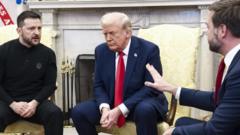
During a meeting at the White House, Vice President JD Vance criticized Ukrainian President Volodymyr Zelensky for his role in U.S. politics and for direct talks with Russia, drawing attention to a new assertive style that departs from traditional vice-presidential roles.
In a striking display of assertiveness, Vice President JD Vance confronted Ukrainian President Volodymyr Zelensky during a recent Oval Office meeting, marking a significant departure from the customary role of U.S. vice presidents as passive aides. Vance initiated the criticism, challenging Zelensky's stance on U.S. diplomacy regarding the ongoing Ukraine-Russia conflict, a conversation that took a sharply confrontational turn.Vance's comments came after he praised President Trump for seeking a diplomatic approach to the war, prompting an incredulous reaction from Zelensky. "What kind of diplomacy, JD, are you speaking about?" Zelensky queried, clearly taken aback. Vance retorted that he was referring to a diplomacy necessary to stop the destruction affecting Ukraine, indicating that the current approach was inadequate.The vice president went further to criticize Zelensky for allegedly campaigning on behalf of Democrats during the 2024 elections, mentioning the Ukrainian leader's meeting with Vice President Kamala Harris in Pennsylvania last September. Vance's stark reprimand drew considerable applause from fellow Republicans, including Senator Lindsey Graham, who suggested that Zelensky should resign, and Senator Tommy Tuberville, who disparaged the Ukrainian president with a derogatory moniker.Vance's aggressive approach is notable, given that traditionally, U.S. vice presidents serve as loyal supporters of the president and typically adopt a muted role. In contrast, Vance, who has gained a reputation for articulating Trump's foreign policy skepticism, has openly questioned the merits of U.S. aid to Ukraine, showcasing a drastic evolution from his earlier critiques of Trump. This meeting was not an isolated incident; Vance has made headlines previously for his unfiltered remarks during international appearances, notably at the Munich Security Conference, where he delivered a vehement rhetoric against European leaders. His unabashed critiques indicate a shift in the administration’s diplomatic style, favoring a more populist tone that resonates with a segment of the Republican base.As Vance navigates this aggressive new role, questions arise about his motivations and strategy. Is he acting on Trump’s directives, or is he carving out his political future? As he continues to take on critics across the globe, it remains clear that Vance is positioning himself as a formidable player in the current political landscape, potentially redefining the vice-presidential role in the process.