In brief
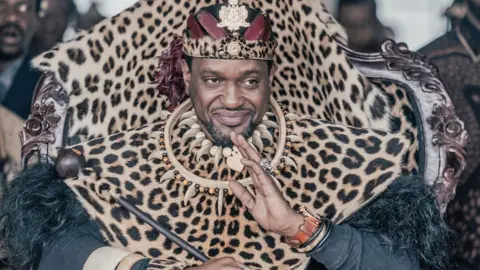
During a speech at Isandlwana, the Zulu king Misuzulu kaZwelithini controversially referred to migrants as 'kwerekwere' and suggested their removal from South Africa, igniting fears of rising xenophobia. This sentiment echoes past statements from his father and highlights the ongoing tensions surrounding immigration in the country. Critics have condemned the remarks as 'hurtful' and harmful, illustrating the complexities surrounding nationalism and xenophobia in modern South Africa.
South Africa's Zulu king has raised eyebrows by using a highly derogatory term for foreigners and saying they must all leave the country during a much-hyped speech that was supposed to have been aimed at calming anti-migrant feelings in his home province of KwaZulu-Natal. Misuzulu kaZwelithini was addressing his supporters at the place where 20,000 Zulus warriors defeated a British contingent of 1,800 soldiers 147 years ago beneath the rocky outcrop of Isandlwana hill.The Battle of Isandlwana, fought during the Anglo-Zulu war, is something many Zulus wear like a badge of honour: they fought against a foreign army and won - the foreigners were cowed. The ire of many of King Misuzulu's subjects is now directed not at British invaders but at migrants from neighbouring countries like Lesotho, Mozambique, and Zimbabwe who have come to South Africa to work. According to official statistics, the country is home to about 2.4 million migrants, about 4% of the population.The 51-year-old monarch did not advocate violence but said all 'kwerekwere', an offensive word for African migrants, must pack their bags - even if they were in relationships with South Africans and had children with them. 'We must now sit down and discuss this because even if my nephew's father is a 'kwerekwere', the 'kwerekwere' must leave, only the child will remain,' he said on Thursday to the delight of his audience - a response which prompted him to burst out laughing.Many online have been quick to point out the irony of his remarks, considering the king's own mother was from Eswatini and one of his wives is also from the neighbouring kingdom. But such xenophobic attitudes have long been an issue in South Africa, leading to deadly outbreaks of violence - and his comments echo those made by his late father Goodwill Zwelithini, who urged migrants in 2015 to 'pack their belongings'. He later tried to back-pedal, claiming he was misquoted, but the country's human rights body found his comments 'hurtful and harmful'. More than a decade on, xenophobia and anger directed at migrants remain a key political issue - with some believing foreigners are stealing jobs and benefiting from public services meant for South Africans.The rate of unemployment in the country remains one of the highest in the world at around 33%. This is something new opposition parties - like uMkhonto weSizwe (MK) led by former President Jacob Zuma, whose main support base is in KwaZulu-Natal - have latched on to with populist policies that support the expulsion of undocumented migrants. This has led in recent years to the rise of vigilante anti-migrant groups, like Operation Dudula, which have gained notoriety for their demands that foreign nationals be removed from the country. Their latest campaign took place a few days before the king's speech and involved protests over the demographics of a local primary school.The king also raised another controversial topic in his speech regarding the name of his province, advocating for the removal of 'Natal' from KwaZulu-Natal, a move reflective of Zulu nationalism that some believe could stir further division in the diverse nation. Cultural experts caution that such sentiments risk heightening tensions in a country struggling with a complex racial and cultural history.