
In brief
The ongoing fentanyl crisis in the U.S. is largely fueled by synthetic opioids smuggled from Mexico, with precursor chemicals primarily sourced from China. While tariffs and international accusations continue, the deadly drug contributes to rising overdose death rates.
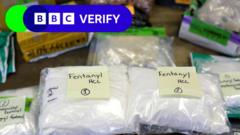
The fentanyl crisis in the United States is escalating, prompting scrutiny over how this potent synthetic opioid infiltrates the country. President Donald Trump has targeted Chinese manufacturers with tariffs, blaming them for not curbing the trafficking of chemicals essential to fentanyl production. Despite Beijing's rebuttal and its own tariff impositions, U.S. authorities remain vigilant.According to the U.S. Centers for Disease Control and Prevention (CDC), fentanyl has been linked to over 74,000 opioid overdose deaths in 2023 alone. Initially approved for medical use in the 1960s, this powerful drug has rapidly transformed into a leading cause of fatal overdoses, often mixed with other drugs without users' knowledge. As little as a two-milligram dose can be lethal, which has exacerbated the ongoing public health crisis.Data from U.S. Customs and Border Patrol (CBP) reveals that the majority of fentanyl enters the U.S. through Mexico. Since September, approximately 4,500 pounds (2,040 kg) of the substance have been seized, with 98% intercepted at the southern border. Mexican cartels, notably the Sinaloa Cartel, are significant players in the distribution network, sourcing precursor chemicals from China and manufacturing fentanyl in clandestine labs in Mexico.The U.S. Drug Enforcement Administration (DEA) has highlighted intricate tactics used by traffickers to disguise shipments, including hiding chemicals amongst legitimate products and utilizing mislabelings. Amid these challenges, the DEA has accused the Mexican government of complicity, a claim rejected by President Sheinbaum as slanderous.Despite China’s classification of fentanyl as a controlled substance in 2019, traffickers exploit loopholes by trading other essential chemicals, complicating law enforcement efforts. Investigations have revealed that some Chinese suppliers knowingly provide instructions and the raw materials necessary for fentanyl production, further entrenching the issue.Interestingly, the crisis isn’t solely a Mexican problem. Canada is also implicated, with Trump accusing both it and Mexico of insufficient border control. Reports indicate that Canadian criminal groups are increasingly involved in importing precursor chemicals and lab equipment from China, supporting local fentanyl production. However, only about 0.2% of U.S. fentanyl seizures occur at the Canadian border, with most coming from Mexico.As countries grapple with the growing crisis, Canada has pledged significant funding aimed at combating the issue. Yet, as law enforcement agencies strive to tackle this transnational problem, the complexities of the fentanyl trade continue to threaten communities across North America.


