In brief
High temperatures, reaching 40°C, have plunged the Gironde region into a wildfire crisis. Firefighters deploy Canadair planes and helicopters to drop water and retardant, while volunteers drive to douse flare‑ups. Residents, such as Pierre Alexandre, refuse to evacuate despite warnings, and tens of thousands are displaced. The struggle continues as crews from all over France converge, “drowning” the flames with water on the soil and vegetation.
High temperatures, reaching 40°C, have left France’s Gironde region in the throes of a relentless wildfire blaze. Firefighters and volunteers are scrambling to protect homes and the countryside as the flames rage on a stretch of woodland near Bordeaux.
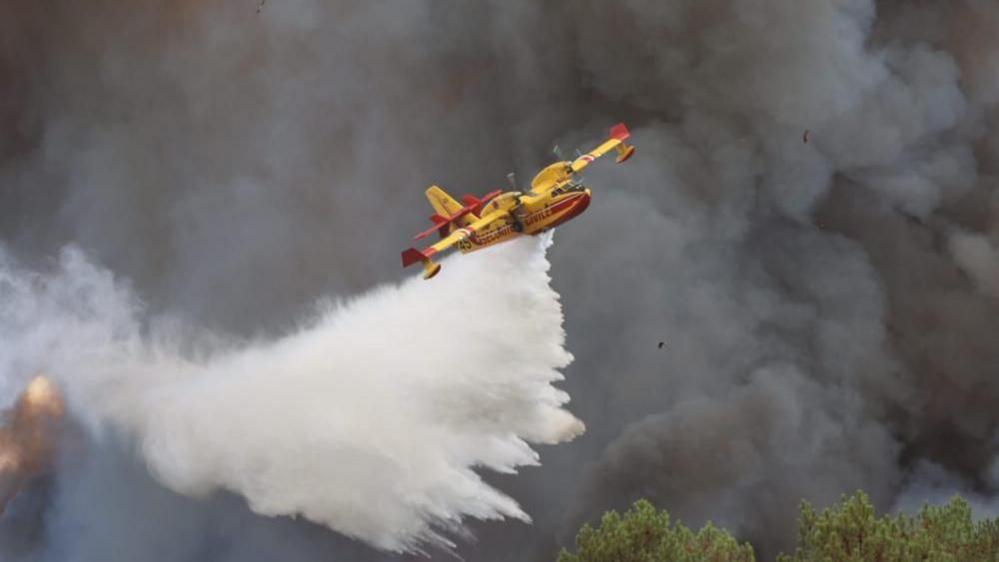
Aerial support has been key: three Canadair aircraft fly in tight formation, each carrying over a thousand gallons of water. They dump their payloads onto the roaring flames below, followed by a stream of red fire‑retardant from a line of helicopters. The sky has become a moving water‑bucket, raining down on the crackling inferno.
On the ground, many crews have moved from the smoke‑filled woods to the village squares, attempting to contain flare‑ups that keep popping up at the base of the fire. “Leave now!” one officer shouted as the smoke thickened, but some residents, like Pierre Alexandre, chose to stay, hoping to fend off the inferno themselves.
The human cost is heavy. Hundreds of thousands have had to leave their homes and businesses. According to a volunteer named Hugo, 50,000 hectares have already been destroyed. He insists “If it’s too late, at least we tried.”
Fire fighters from across France— from Brittany in the north to Marseille and Lyon in the south—have converged on the Gironde. They are “drowning” the flames by watering the soil and vegetation, a method known as “noyer.” The fight continues, but authorities say the region may be under relative control for now, while the wildfire is far from completely doused.
The crisis raises stark questions about how communities will respond to escalating heatwaves and wildfire risks. Authorities urge that residents heed evacuation orders and that volunteers continue to supply water to curb the spread of fire.