In brief
With charismatic leadership and a distinct appeal to a youth-driven audience, Ibrahim Traoré's rise to power and bold socio-economic reforms are garnering admiration across Africa and beyond.
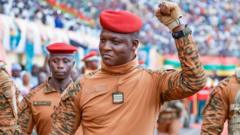
In less than two years since seizing power through a coup, Capt. Ibrahim Traoré has crafted an image as a pan-African leader determined to liberate Burkina Faso from Western imperialism and neo-colonialism. The 37-year-old military ruler has gained significant support not only within his nation but also resonates with audiences throughout Africa and the diaspora.His comparison to Thomas Sankara, Burkina Faso's revolutionary leader, has fueled admiration as many see Traoré as a modern figure embracing the continent's historic struggles against colonial powers. "His impact is huge," reveals Beverly Ochieng, a senior analyst at Control Risks, reflecting a growing sentiment among many African communities questioning their relationships with the West. After overthrowing the former government in 2022, Traoré cut ties with France, instead fostering an alliance with Russia that has led to the establishment of a state-owned mining company and deeper local involvement in Burkina Faso's resource wealth. This ambitious initiative includes a planned gold refinery and a move to establish national gold reserves, positioning the country to capitalize on its mineral riches more effectively. Yet the approach of the Traoré junta has prompted challenges for Western companies, as evidenced by arbitration claims from Australian firm Sarama Resources after they lost an exploration license. The rising military government's shift towards nationalization, including taking over former foreign-owned mines, has contributed to heightened tensions.Traoré's support is bolstered through social media, where his messages resonate with a younger demographic disillusioned by the status quo of democracy often failing to deliver substantive improvements to their lives. "He is adept at understanding the art of politics," remarks Rinaldo Depagne from the International Crisis Group, highlighting how Traoré's charismatic persona and media savviness contribute to his appeal as a leader of the populace.However, Traoré's ascent comes amidst rising tensions with traditional Western allies like France and the United States, further complicated by accusations of him aligning with neo-imperial forces. This atmosphere of skepticism deepens as the junta grapples with ongoing security challenges posed by extremist groups. Critics also note that efforts to quell dissent within the country may impede his revolutionary image. Crowds of supporters rallied in Ouagadougou and worldwide, showcasing enthusiasm for Traoré's vision of a sovereign Africa free from colonial influences. His powerful speeches and public displays have positioned him as a symbol of resistance for many, both locally and across borders. Despite the hopeful narrative Traoré presents, analysts caution that he will need to prioritize stability and governance rather than authoritarianism to ensure a lasting legacy. As Traoré continues to lead Burkina Faso, the world watches, intrigued by a potential shift in the landscape of West African politics, inspired by figures like him and their appeals to sovereignty, dignity, and self-reliance.