In brief
In the backdrop of stringent US sanctions that have crippled Venezuela's oil export capabilities, the country has turned to a strategy involving ghost ships. These vessels, often changing identities and employing deceptive tactics, are crucial for Venezuela's attempts to maintain oil revenue as President Trump intensifies measures against sanctioned tankers.
In a further escalation of tension between the United States and Venezuela, President Donald Trump has ordered a naval blockade to stop sanctioned oil tankers from entering and leaving the South American country.
Venezuela - which has the world's largest proven oil reserves - is highly dependent on revenues from its oil exports to finance its government spending. But US sanctions targeting Venezuela's state-run oil company PDVSA have made exporting oil difficult for the Venezuelan government, leading them to resort to a fleet of ghost ships.
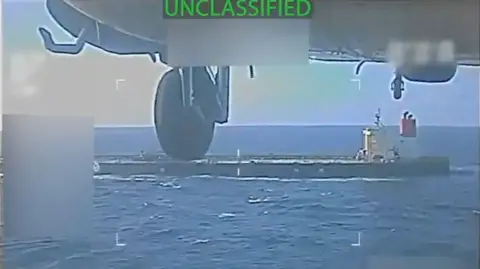
As of last week, more than 30 of the 80 ships in Venezuelan waters or approaching the country were under US sanctions, according to data compiled by TankerTrackers.com. President Trump’s total and complete blockade focuses on these vessels, following the seizure of an oil tanker suspected of being part of the ghost fleet.
Despite US sanctions, Venezuela's oil exports have partially recovered to around 920,000 barrels per day as of November, revealing the government's adaptation strategies, including the use of ghost ships.
These ghost ships commonly employ tactics like changing their names and flags frequently, disabling their tracking signals, and adapting identities from scrapped vessels to evade detection. Similar methods are being seen in other countries like Russia and Iran, showcasing a broader trend in maritime oil trade under sanctions.
The tactics of deception and stealth underline Venezuela's ongoing struggle to navigate a challenging international landscape, reinforcing that the fight over oil continues to be pivotal to its economic lifeline.