In brief
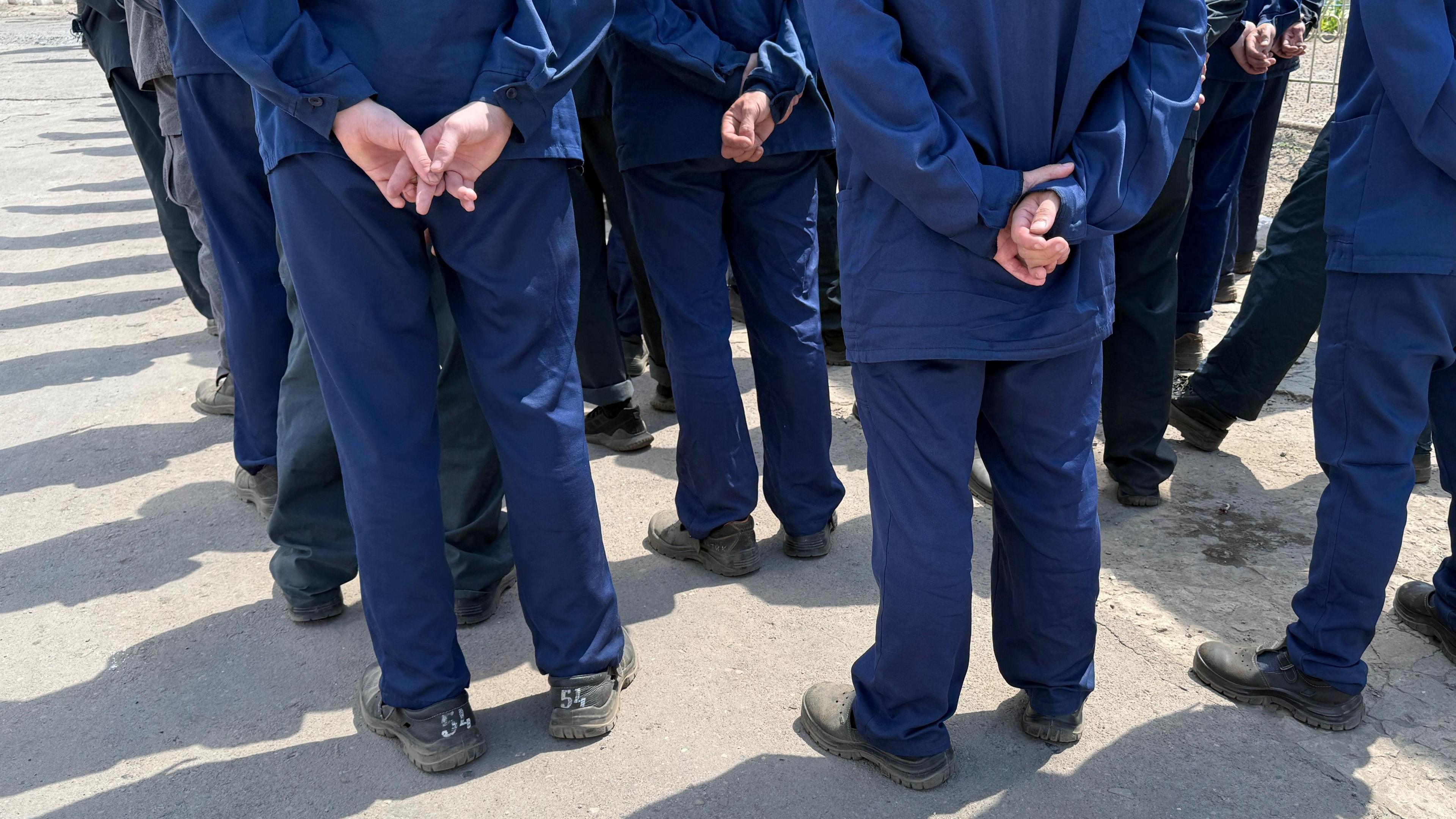
In a heavily guarded camp in western Ukraine, men who were born in Ukraine but now consider themselves Russian sit in rows of navy uniforms. The soldiers, some from major Russian cities and others from occupied eastern regions, share their stories of voluntary enlistment, financial incentives, and deep national identity shifts. They admit to feeling trapped between the conflict’s warring sides, yet many still refuse to see themselves as traitors. While some claim they left voluntarily, others were coerced, with more than 50,000 conscripted across occupied territories. The camp’s chores—making coffins, producing Christmas trees—speak to the complex everyday life of these POWs and hint at how the war shapes identity.
Behind high walls and locked gates in western Ukraine, a camp houses men who once fought on Russia’s side. The group includes those from major Russian cities and several from occupied eastern regions where Russia has established its own schooling and media.
One interviewee, Anton, says he grew up under occupation, spoke Russian for most of his life and considers himself Russian. He joined the Russian army when the full‑scale invasion began, 18, and later told reporters he did not regret his choice, even insisting he was fighting for his land.
Other captured fighters echo Anton’s sentiment. They have lost friends and family and feel that conscription was a means to survive. Still, they argue that the war’s costs are higher than the propaganda promises.
Despite an official stance in Kyiv that Ukraine’s citizens are still Ukrainian, many prisoners acknowledge that their national identity has blurred. They are part of a generation that learned Russian language, history and political narratives directly from Russian authorities.
Within the camp, prisoners engage in daily chores – building coffins and crafting Christmas ornaments – to earn extra food and cigarettes with the money they make. These tasks demonstrate the grim routine of life at the camp.
While the Ukrainian government treats captured soldiers as prisoners of war, they remain a low priority for exchanges with Russia. Some prisoners feel they may be the last to be released if they survive the war.
The camp’s environment reveals the complex interplay of identity, survival, and state propaganda in a conflict that pits former compatriots against each other.