In brief
The United States is enhancing its Arctic capabilities by ordering icebreakers from Finland, known for their advanced icebreaker technology. President Trump emphasized the importance of securing ice-rich regions amid global shipping route changes due to climate change. The US will acquire four icebreakers from Finnish builders, with additional vessels to be constructed in the US, all featuring Finnish designs. This initiative is part of a broader strategy to counter movements by Russia and China in the Arctic.
As President Donald Trump continues to insist that the US needs to own Greenland, his focus on the Arctic has led to Washington ordering new icebreakers. For these crucial ships, the US has turned to the world expert – Finland.
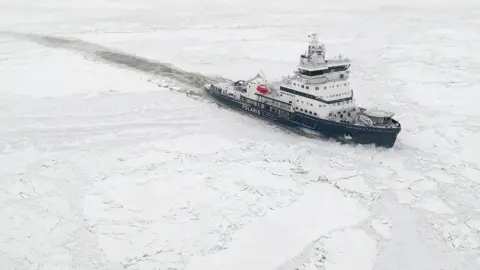
Inside Aker Arctic Technology's ice laboratory, models of icebreakers are tested in a state-of-the-art simulation tank in Helsinki. With the capacity to plow through solid ice, the ships are vital for maintaining the US Coast Guard’s operations in frigid Arctic waters.
According to Finnish ice performance engineer Riikka Matala, the ship’s design must guarantee adequate structural strength and engine power. The chief executive of Aker Arctic Technology, Mika Hovilainen, further elaborates on the innovative hull design that allows ice to be broken effectively.
Finland's dominance in icebreaker technology stems from its geographical challenges and the necessity of keeping ports open during harsh winters. The country designs and builds over 80% of the world's icebreakers, maintaining a fleet essential for its economy.
Trump announced in October 2025 that the US intends to order four icebreakers from Finland for the Coast Guard, with an additional seven being constructed in the US based on Finnish designs. He affirmed this investment as a measure to procure the 'finest icebreakers in the world' from a country renowned for their advanced engineering.
The decision also underscores a shift in strategy, as the US has historically relied on domestically manufactured vessels but has waived regulations due to increased threats from adversaries such as Russia and China.
Climate change is making Arctic navigation increasingly feasible for commercial routes, raising the stakes for the US and its allies. Experts note that the geopolitical landscape is shifting, with heightened shipping activity in once-icy waters of the Arctic.
As the US prepares to bolster its icebreaker fleet, there are concerns about being outnumbered by Russia’s extensive icebreaker fleet and China’s growing expeditions into Arctic territories, prompting the need for an assertive US presence in the region.
The first icebreakers under this new contract are expected to be delivered in 2028, with construction activities ramping up in both Finland and the US. This strategic investment demonstrates the US commitment to maintaining its interests in an increasingly vital Arctic region.