In brief
The recently unveiled "Boom Boom" sculpture in Taupō Sculpture Park has generated a heated discussion, with opinions ranging from praise to skepticism over its relevance and funding.
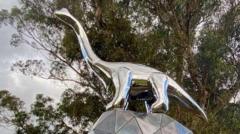
A towering seven-meter dinosaur sculpture named Boom Boom has become the talk of the town in Taupō, New Zealand. The reflective installation, crafted by artist Gregor Kregar and commissioned by the Taupō Sculpture Trust, has sparked both admiration and contention since its debut just days ago.The artist explained that eliciting strong reactions was part of the sculpture's intent, saying, "Sculpture sometimes stops people from their everyday interactions with the world." While many locals appreciate the art for stimulating conversation, some have raised concerns regarding the use of $100,000 of public funds, expressing discontent over the investment when alternative community needs exist.The funding for Boom Boom was secured in 2018, preceding recent increases in local council taxes, leading critics to question whether the expenditure was wise. Others argue the artwork lacks a connection to the town's identity, which was recently named the most beautiful in New Zealand.Kregar defended the project by noting that the rock on which the dinosaur rests draws inspiration from the region's volcanic characteristics. The iconic Lake Taupō, from which the town derives its name, is a caldera formed by a volcano that last erupted roughly 1,800 years ago.Boom Boom, representing a sauropod dinosaur—one of the few species believed to have roamed New Zealand—has generated buzz and debate in the community. Kregar remains hopeful that initial critics may come to embrace the piece as integral to the town's identity: “You put the sculpture out there, there is reaction... and then it becomes something that they start embracing.”Kim Gillies, secretary for the Taupō Sculpture Trust, emphasized the importance of the sculpture in elevating Taupō's profile, arguing that "safe is a bit boring." As this lively discussion continues, Boom Boom stands as a testament to the power of public art and its role in shaping community dynamics.