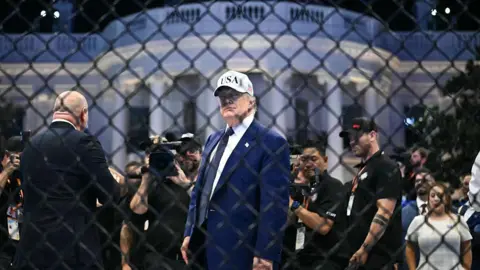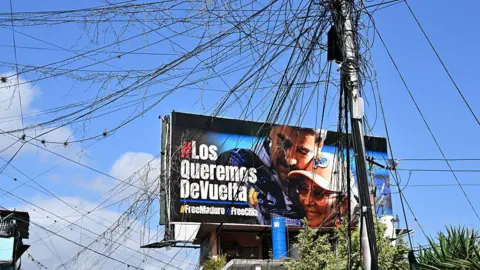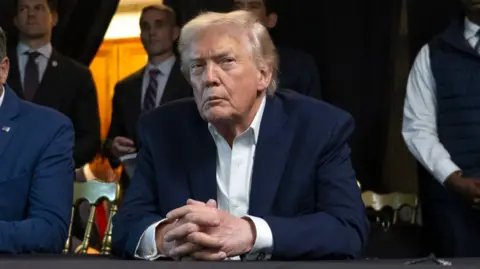
Only a few hours after the Venezuelan President Nicolas Maduro was removed from his palace, his job and his country by US special forces, Donald Trump was still marvelling about how it felt to monitor a live feed of the raid from his Mar-a-Lago mansion.
He shared his feelings with Fox News.
If you could see the speed, the violence, they call it that... It was amazing, amazing work by these people. No one else could do something like this.
The US president wants and needs quick victories. Before he took office for the second time, he boasted that ending the Russia-Ukraine war would be a single day's work.
Venezuela, as presented in Trump's statements, is the quick, decisive victory that he has craved. Maduro is in a prison cell in Brooklyn, the US will run Venezuela - and he has announced that the Chavista regime, now with a new president, will turn over millions of barrels of oil and that he will control the way the profits are spent. All, so far anyway, without an American life lost and without the long occupation that had such catastrophic consequences after the invasion of Iraq in 2003.
For now, at least, Trump and his advisers, publicly at least, are ignoring Venezuela's complexities. It is a country bigger than Germany, still run by the regime of factions that has embedded corruption and repression into Venezuelan politics.
Instead, Trump is enjoying a geopolitical sugar rush. Judging by their statements as they flanked him at Mar-a-Lago, so are US Secretary of State Marco Rubio and Secretary of War Pete Hegseth.
Since then, they have repeated that Trump was a president who does what he says he is going to do.
Trump likes nicknames. He still calls his predecessor Sleepy Joe Biden.
Now he's trying out a new name for the Monroe Doctrine, which has been a foundation of US policy in Latin America for two centuries.
Trump renamed it, naturally, after himself – the Donroe doctrine.
James Monroe, the fifth president of the United States, unveiled the original in December 1823. It declared that the western hemisphere was America's sphere of interest – and warned European powers not to meddle or establish new colonies.
The Donroe Doctrine puts Monroe's 200-year-old message on steroids.
That means using US military and economic power to coerce countries and leaders that get out of line – and to take their resources if necessary. As Trump warned another possible target, the president of Colombia – they need to watch their ass.
Greenland is in America's sights, not just because of its strategic importance in the Arctic – but because it has rich mineral resources that are becoming accessible as climate change melts the ice sheets. Rare earths from Greenland and heavy crude oil from Venezuela are both seen as strategic US assets.
Unlike other interventionist US presidents, Trump does not cloak his actions with the legitimacy, however spurious, of international law or the pursuit of democracy. The only legitimacy he needs comes from his belief in the force of his own will, backed by raw US power.
But the combination of Trump's America First ideology and his businessman's acquisitive, transactional instincts have led him to believe that America's allies need to pay for the privilege of his favour. Friendship seems too strong a word. America's interests, in the narrow definition laid out by the president, require it to stay top dog by acting alone.
The risk is that, if Trump sticks to his course, he will push the world back to the way it was in the age of empires a century or more ago - a world where big powers, with spheres of influence, sought to impose their will, and where mighty authoritarian nationalists led their peoples to disaster.