In brief
On Tuesday the Trump administration announced a ban on new imports of foreign‑made humanoid and quad‑legged robots, citing unacceptable security risks. The FCC also added power inverters used in data centres and solar panels to its Covered List, warning that foreign models could be exploited for cyberattacks or remote control. Beijing’s embassy condemned the move as “politicising trade” and threatened counter‑measures, urging global cooperation on AI for the common good. The restriction fits into a wider U.S. push to limit Chinese access to advanced robotics and AI, amid escalating trade tensions and protectionist tariffs on Chinese electric vehicles and semiconductors.
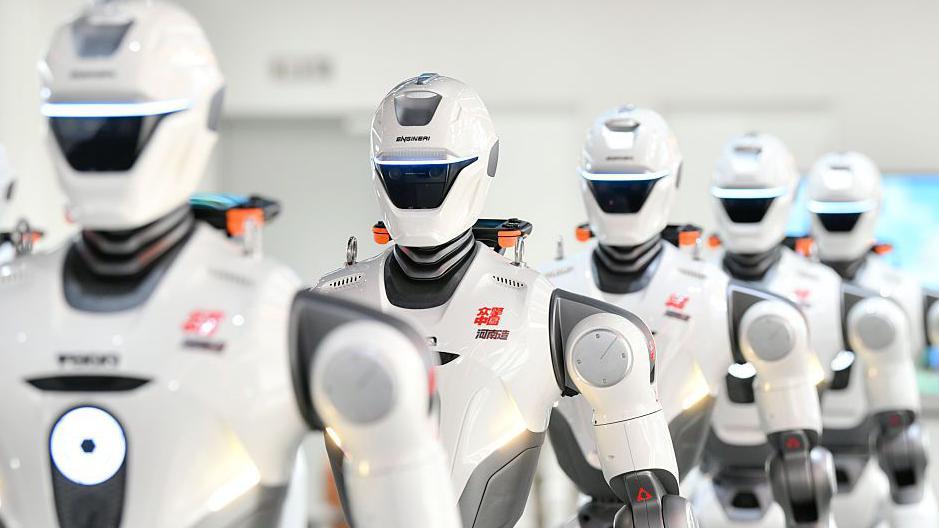
On Tuesday, the Trump administration announced a ban on the import of new foreign‑made humanoid and four‑legged robots. The ban was framed as a response to what officials described as an unacceptable national‑security risk posed by advanced machines developed abroad.
The restriction covers newly manufactured devices only; existing models that had received prior FCC clearance remain available for purchase and use. The ban specifically targets robots made in China – the world’s largest producer of such machines – amid a broader trade conflict that has already seen steep tariffs on Chinese electric vehicles and a blockade on U.S. semiconductors destined for Beijing.
The Federal Communications Commission, which added the power inverters used by data centres and solar panels to its Covered List, warned that foreign models could be remotely shut down, serve as a data‑exfiltration channel, or be commandeered in a cyber‑attack. These concerns echo the earlier fears that robotics could be weaponised or used to infiltrate American defence infrastructure.
Beijing’s embassy in Washington criticized the United States’ approach as “politicising trade” on a ground‑less pretext. It pledged to take “all necessary measures” against perceived retaliatory actions and called on nations to develop AI responsibly and for the public good.
The FCC’s decision was defended by Chairman Brendan Carr, who said the agency was safeguarding “America’s critical supply chains.” Nonetheless, the move underscores the tense U.S.–China relationship over emerging technologies, with each side accusing the other of using sanctions to gain a technological edge.
Industry analysts warn that the ban could stifle innovation in sectors ranging from manufacturing automation to domestic service robots. American companies such as Tesla and Boston Dynamics – both actively developing their own humanoid platforms – may need to accelerate their timelines to remain competitive against suddenly restricted Chinese imports.
As the debate over robotics and AI continues to intensify, stakeholders will closely monitor how the restriction shapes the global robotics supply chain and the geopolitical landscape of next‑generation tech.