In brief
Moerdijk, a small Dutch fishing village, is at risk of being demolished to make way for high-voltage substations and infrastructure related to renewable energy projects. With approximately 1,100 residents potentially displaced, local businesses and families are grappling with the harsh reality of losing their homes. The situation reflects a broader tension in the Netherlands as the government seeks to balance land use between energy demands and community preservation.
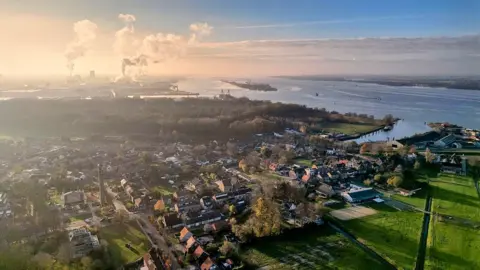
In the south of the Netherlands, beside a wide estuary, a village of around 1,100 people is likely to disappear from the map.
Moerdijk, a small fishing community located 34km (21 miles) south of Rotterdam, finds itself at the center of the country’s green energy transition. The Dutch government has identified the need for vast new sites to build high-voltage substations to connect the growing electricity output from offshore wind farms to the national grid.
However, the Netherlands is facing a critical shortage of available land. Officials argue that Moerdijk, situated conveniently next to ports and existing infrastructure, is an ideal location for these energy facilities.
The prospect of seeing their homes demolished poses a real threat for residents, creating a tangible sense of loss and anxiety about the future. As fishmonger Jaco Koman emphasizes, We are being brought to the slaughterhouse, referring to the inevitable prospect of losing both his business and home.
For generations, the community has thrived amidst the estuary's resources, but the competing demands for land have reached a tipping point. Are they really saying that you have to go with your village? Koman questions, voicing the sentiment of many locals who suddenly feel their way of life is under siege.
The emotional weight of the situation intensifies as families contemplate the ramifications of losing not just their homes, but their connection to a place that holds decades of memories. Andrea, who runs the local grocery store, confesses her fears of losing her husband’s handcrafted home and the village cemetery where her family rests.
As the municipality balances the needs of the national government with local desires, Mayor Aart Jan Moerkerke acknowledges the immense pressure to sacrifice Moerdijk for the greater good of energy security. Meanwhile, the arguments being raised resonate with broader issues across the densely populated Dutch landscape—a struggle to find harmony between competing interests in an era of significant environmental change.
The impending decision on Moerdijk's fate is multi-faceted, hinting at deep-rooted dilemmas society faces as it navigates the shift towards renewable energy and sustainability. Enhanced energy infrastructure promises eco-friendly progress but at a potentially devastating cost to established communities.
The decision on Moerdijk’s future looms, encapsulating the harsh realities of the intersection between energy needs and the intrinsic value of local communities. For now, Moerdijk stands at a critical juncture, vulnerable yet resilient as it faces an uncertain future.