In brief
Experts warn that South Korea is grappling with the consequences of unprecedented wildfires that have already claimed 27 lives, driven by environmental conditions exacerbated by climate change.
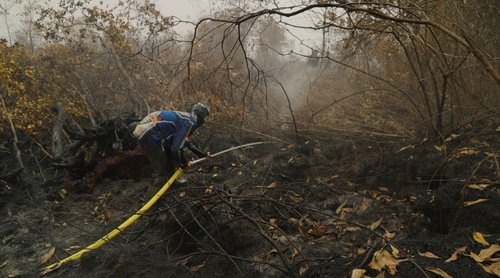
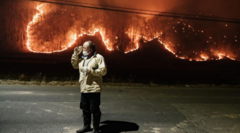
The ongoing wildfires in southeastern South Korea illustrate a tragic convergence of dry weather, powerful winds, and an abundance of highly flammable pine forests. As of Thursday, the inferno has consumed approximately 35,810 hectares (88,500 acres), a land area nearly equivalent to half the size of New York City. The latest reports indicate a death toll of 27, with tens of thousands displaced from their homes.Authorities suspect that human activity ignited the fires, but the severe impacts can be attributed to unprecedented weather patterns causing dryness across the region. The National Institute of Forest Science's Lee Byung-doo explained that the high concentration of resin-rich pine trees in North Gyeongsang province significantly fuels the blazes, enabling them to burn intensively and rapidly. "Pine forests are particularly vulnerable during wildfires," he noted, as their ability to retain needles through winter contributes to the phenomenon of crown fires, wherein flames spread quickly through the canopy.Unlike its neighbors, South Korea has made progress in increasing forest cover in recent years. However, as Baek Min-ho from Kangwon National University notes, the accumulation of fallen leaves and pine debris has made these forests more susceptible to wildfires. Climate experts believe the situation has been worsened by climate change, with the harsh conditions serving as a stark reminder of the ongoing climate crisis.In an alarming report, South Korea's disaster chief, Lee Han-kyung, stated that the ideal conditions for such record-braking wildfires have been developing over the past few weeks, including temperatures soaring above 20C (68F) in spring, a sight that climate analysis suggests has become up to five times more common due to global warming.Compounding the devastation, the densely forested regions and strong winds have hindered firefighting efforts. A tragic accident occurred when a 73-year-old pilot lost his life in a helicopter crash while combating the fires, adding to the growing toll.In South Korea, an aging population has been particularly vulnerable during the crisis. Many of the deceased are in their 60s and 70s, complicating evacuation efforts when health issues or mobility restrictions come into play. Reports indicate that elderly residents from a care facility perished in their vehicle as escape routes became engulfed in flames.Amid the destruction, residents share harrowing accounts of their lives turned upside down. One Andong local recounted evacuating without belongings, highlighting the immense struggles faced by communities, particularly those populated by elderly individuals. "I hope the government can provide temporary shelters where people can stay comfortably," she stated.Additionally, the fires have decimated historical artifacts, including ancient temples that define the cultural heritage of the region. The Gounsa temple, dating back to the Silla dynasty over a millennium ago, is among the irreplaceable treasures lost to the flames. Authorities continue to coordinate relief and recovery efforts as the intensity of the wildfires underscores the urgent need for comprehensive disaster response measures.