In brief
Bashar al-Assad’s hold on Syria is faltering, leading to new leadership under Ahmed al-Sharaa, who faces the monumental task of rebuilding a fractured country while managing local expectations and international scrutiny.
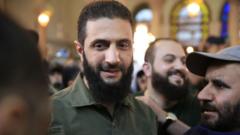
In early December, the tides in Syria shifted dramatically when the rebel coalition secured Aleppo, a victory overshadowed by the ensuing chaos. Contrary to expectations of a continued regime fightback, Bashar al-Assad's alliances with Russia, Iran, and Hezbollah seemed increasingly tenuous as the regime crumbled amidst corruption and significant losses on the battlefield. Reports showed rank-and-file soldiers abandoning their posts, signaling a loss of morale among loyal troops.Instead of reporting from frontline trenches, I found myself walking through the opulent halls of the presidential palace in Damascus alongside Ahmed al-Sharaa, the new de facto leader emerging from the remnants of the battle-scarred nation. Once known as Abu Mohammed al-Jolani, al-Sharaa represents a shift from pure military command to the necessity of governance and political dialogue amid skepticism about his past beliefs and intentions.Questions about women’s rights and social freedoms highlight the delicate balance he must maintain. While he pointed to female student representation in educational institutions, his reluctance to explicitly endorse women's freedoms or to discuss issues like hijab laws reveals the tension between conservative societal norms and the desires of a burgeoning secular populace.Al-Sharaa focused on the broader woes of the Syrian populace, pointing to the millions displaced and the brutality they faced. He argued that lifting sanctions, which originally targeted the Assad regime, is critical for rebuilding and stability. Despite pressure from global powers, he seems chiefly concerned with Syrian public opinion rather than external validation.The complex geopolitical landscape remains a formidable barrier; other nations' interests, particularly Israel's military actions and Turkey's positioning, complicate his aspirations. Al-Sharaa recognizes the necessity of establishing a stable and inclusive government but faces severe challenges from remaining extremist factions and potential public unrest tied to vengeance against past regime officials.As Syria navigates this new chapter, it stands at a critical crossroads: Will Ahmed al-Sharaa’s vision unite a divided country, or will the remnants of its turbulent past dictate its future? What's clear is that a tidal wave of external influences and internal dynamics will play a role in shaping the nation’s recovery or its descent into further chaos.