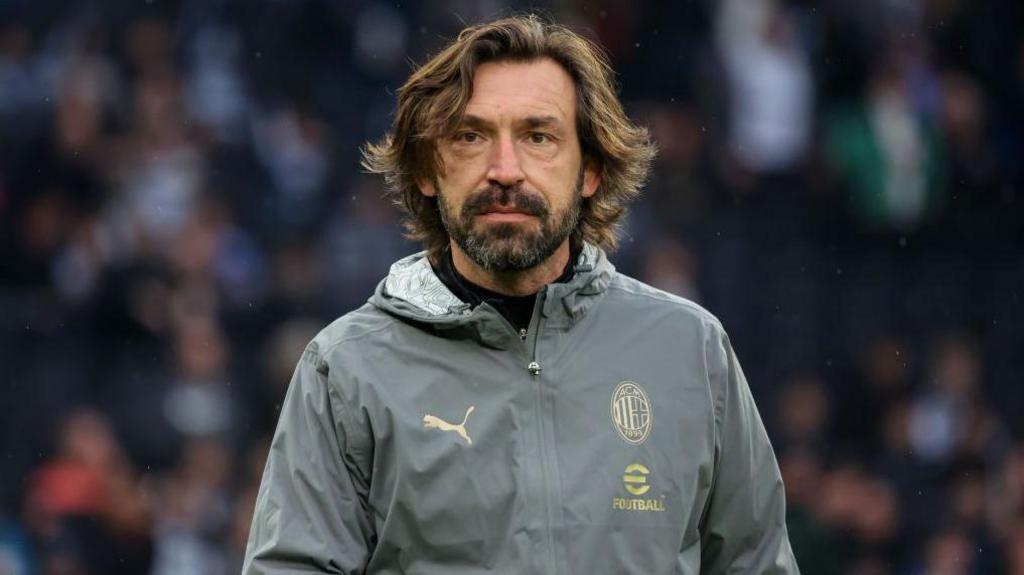
Andrea Pirlo has said he is no longer a candidate to coach the Italian national side following days of controversy over his ties to a Russian betting company.
Pirlo’s appointment had not yet been confirmed by the Italian Football Federation (FIGC) but was being treated as all but certain.
Over the weekend, several Italian politicians criticised the FIGC’s choice, noting that Pirlo, 47, had taken up a role as global ambassador for Russia’s Fonbet last October.
The betting company has sponsored several sporting events involving veterans of Moscow’s war in Ukraine and has organised events in Russia at which Pirlo appeared alongside pro‑Kremlin figures.
"Anyone who is or has been promoting Russia after 2022 should not hold national office," said Carlo Calenda of the centrist Azione party.
Pirlo wrote on Instagram on Monday morning: "After learning last night that I am no longer a candidate for the Italian national team, I feel it is my duty to clarify some aspects."
He added that any "professional collaboration" he undertook in his capacity as coach for United FC in Dubai was exclusively commercial and sporting.
Pina Picierno, vice‑president of the European Parliament, said the Italian football community "desperately needed a cultural, ethical and managerial revolution", and that Pirlo’s choice "goes in the exact opposite direction".
The Russian ambassador in Rome, Aleksey Paramonov, offered support, describing it as "saddening" that Pirlo was being ostracised in Italy despite his "extraordinary contribution to world sport".
Scrutiny intensified last spring when Pirlo took part in a Fonbet event in Moscow, where he and former teammate Marco Materazzi signed autographs at Luzhniki Stadium, alongside pro‑Kremlin pop star Shaman.
Ukrainian skeleton slider Vladyslav Heraskevych, who was disqualified at the Winter Olympics, criticised Pirlo for appearing next to Russian footballer Artem Dzyuba, who took pride in his Russian nationality.
The debate now risks engulfing FIGC technical director Paolo Maldini, who has only been in post since 11 July and may resign over the failed appointment.
Maldini and his adviser’s mandate—to find a new head coach to steer Italy through a Nations League group that includes France, Belgium and Turkey—has been shaken.
The Italian football community, already soul‑searching after failing to qualify for the 2026 World Cup, has seen other high‑profile names considered: Antonio Conte and Roberto Mancini, the latter who led Italy to Euro 2020 before stepping down to coach Saudi Arabia.