In brief
Michelle Lemuya Ikeny's compelling performance in the film "Nawi" addresses the pressing issue of child marriage, particularly highlighting its prevalence in her home region of Turkana, Kenya.
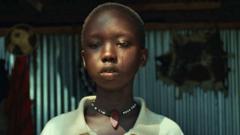
Michelle Lemuya Ikeny, a young actress from Turkana, shares her journey portraying Nawi, a 13-year-old girl forced into marriage, in the impactful film "Nawi." As she takes on this vital role, Michelle's motivation is clear: to elevate the conversation around child marriage—a topic she believes remains largely taboo in her community. In regions like Turkana, where the United Nations reports that one in four girls are married before they turn 18, Michelle emphasizes the real-life implications of her character's story. "Many of my friends had to leave school because dowries were paid for their marriages," she explains. Her portrayal of Nawi's struggle against being sold to an older man resonates deeply, earning her the Africa Movie Academy Award for best promising actor.In a bid to reject her fate, Nawi concocts a plan to escape her arranged marriage on her wedding night, showcasing resilience and determination as she pursues her education in Nairobi. Her father's efforts to reclaim her highlight the harsh realities of child marriage, emphasizing its legal opposition in Kenya, where individuals must be at least 18 to wed. The film's narrative, penned by Milcah Cherotich—who drew inspiration from her own sister's forced marriage at 14—offers a personal insight into such issues faced by many girls in sub-Saharan Africa. While the film may elicit backlash in some conservative circles, Cherotich found hope in changing perceptions through shared stories, even moving her uncle to tears during an early screening.Beyond Kenyan borders, the problem of child marriage remains a critical concern. UNICEF reveals that one in three girls in sub-Saharan Africa risk early marriage, with calls for accelerating efforts to eradicate the practice. Despite progress made globally, regions like West and Central Africa see stagnation, necessitating immediate action.Directors Toby Schmutzler and Apuu Mourrine remain passionate about the film's message, driving efforts for wider distribution. Recently screened at the United Nations headquarters, "Nawi" has also laid the groundwork for educational initiatives, including a new school in Turkana designed to empower girls.As Michelle reflects on the opportunity to advocate for change through her art, she urges viewers to empathize with girls like Nawi. "When someone takes your dreams away, it's the worst feeling ever," she shares, echoing the hope that "Nawi" will alter lives and foster vital conversations about the future of girls everywhere.