In brief
In a notable culmination of China's burgeoning space ambitions, the Shenzhou 19 mission has successfully launched, advancing towards the country's overarching goal of establishing dominance in space with plans for Moon expeditions by 2030.
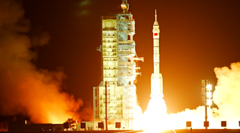
China's Shenzhou 19 mission represents a significant leap in the nation's space exploration endeavors, featuring a fresh generation of astronauts committed to groundbreaking research and the drive to solidify China's place in the cosmic frontier. As excitement builds around this ambitious project, the global implications of space resources and military potential prompt critical discussions regarding international dynamics.The article text:China has declared a monumental success in its space ambitions with the launch of the Shenzhou 19 spacecraft, which has successfully docked after over six hours in flight. This mission, featuring a three-person crew that includes the nation's first female space engineer, will serve as a launching pad for experiments and spacewalks at the newly established Tiangong space station for the next six months. The Shenzhou 19 mission forms part of China's ambitious plan, which aims to execute a record 100 launches this year alone, marking its emergence as a formidable competitor to the US in space exploration. The launch took place at the Jiuquan Satellite Launch Center in Gansu, where vibrant scenes unfolded—flames erupted as the rocket ascended, igniting the Gobi Desert and eliciting cheers from hundreds gathered to send off their taikonauts.President Xi Jinping's vision of constructing a powerful space presence has intensified, positioning China's space program's growth as a national priority. Observers in Washington, however, regard this advancement with wariness, perceiving a strategic rivalry as NASA's Bill Nelson noted that the US and China are entrenched in a race for lunar territory.The Shenzhou 19 astronauts, including pilot Cai Xuzhe, expressed a profound sense of responsibility and national pride. "Inspired by dreams that spark glory," Xuzhe assured, "we will strive to make our country’s name shine once again in space." Their youthful counterparts bring a renewed energy to the mission, as Song Lingdong recounted his early childhood inspiration from watching China's initial space missions. With ambitious plans to use the Tiangong space station as a base for scientific inquiries, the crew aims to study the physiological impacts of microgravity on subjects such as bone and muscle deterioration, potentially leading to medical breakthroughs for health challenges faced on Earth. In a time marked by heightened technological competition, China is also eyeing the Moon as a potential source of wealth, with experts debating estimated values for resources that may lie beneath its surface. This prospect has ignited concerns regarding the militarization of space as US officials highlight the rapid advancements made by China in surveillance satellites and reconnaissance capabilities.While officials from China's space administration emphasize the peaceful intentions behind their endeavors, asserting that these efforts are a collective mission for humanity, the reality of competing interests looms large. As the global narrative shifts towards extracting resources from lunar objects and advancing exploration technology, the urgency for collaboration becomes clear amidst comprehensive challenges in establishing a presence beyond Earth. With eyes fixed on the future, China's space program reflects the delicate balance between aspiration and caution, paving a bold path in the ever-evolving domain of space exploration.