In brief
A team from Macquarie University has discovered a previously unknown species of spider in northern Queensland’s rainforests that uses a unique spring‑loaded silk trap to launch green tree ants into a bigger web at astonishing acceleration. Nicknamed the “ballista” for its catapult‑like mechanism, the spider builds a cone‑shaped scaffold of tension lines that, when triggered by the ant’s bite, throws its prey into the web with forces greater than those felt by jet pilots. Unlike other spiders that capture multiple prey types, the ballista targets only the aggressive Oecophylla smaragdina ants, possibly luring them with pheromones. This first documented case of a web designed for a single prey species showcases a novel evolutionary strategy to safely handle dangerously defensively‑armed ants.
Scientists have identified a new spider species in Queensland’s remote rainforests that uses a spring‑loaded silk trap to hurl green tree ants into its web like a catapult.
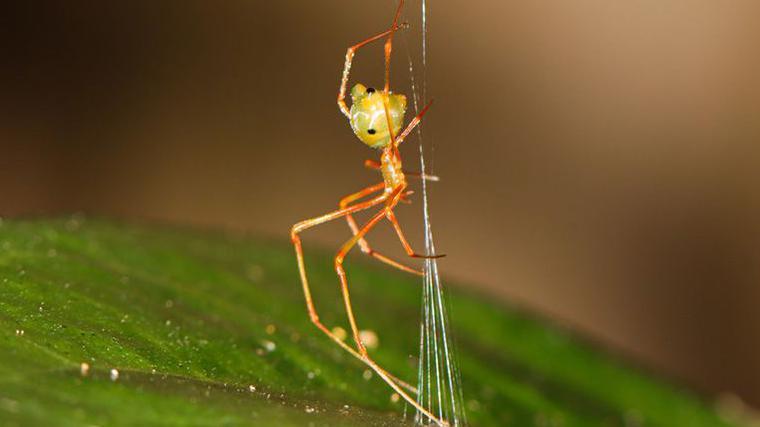
The spider, still unnamed but locally called the ballista after its cannon‑style launch, was spotted by Macquarie University researchers who spent ten nights filming its nightly routine with high‑speed and infrared cameras.
At night the tiny arachnid descends about 50 cm from a leaf or branch, lashing dozens of tensioned silk lines into a cone shape and then weaving a thinner silk around it. Even a single bit of the ant produces enough force for the trap to spring, at an acceleration described as “15 times the most extreme g‑forces experienced by jet pilots.”
Unlike other sticky predators, the ballista has evolved to capture only green tree ants (Oecophylla smaragdina). The team suspects the spider secretes pheromones to attract and agitate this single prey species before launching it into the web.
These findings, published in Current Biology, detail how the spider’s novel hunting style keeps it from encountering the ants’ defensive stings, chemical defences and social retaliation, trapping prey one at a time before safely retreating to a hidden web beneath leaf undersides.
With this discovery, researchers claim it is the first case of a web designed for a single prey species and triggered by the prey itself rather than by the predator. The finding not only broadens our knowledge of arachnid behaviour but also showcases an evolutionary marvel in the wild.
Ballista spider uses a spring trap to fling ants into its web.