In brief
In a much-anticipated auction, the archive containing crucial information to decode the last secret message of the Kryptos sculpture, located at CIA headquarters, sold for $963,000. This auction's winner gains a rare opportunity for a private meeting with artist Jim Sanborn, with hopes of shedding light on the perplexing K-4 segment that has eluded many for over three decades. The sale caps an enduring fascination with the intricate relationship between art and cryptography, drawing a community of enthusiasts eager for the ultimate reveal.
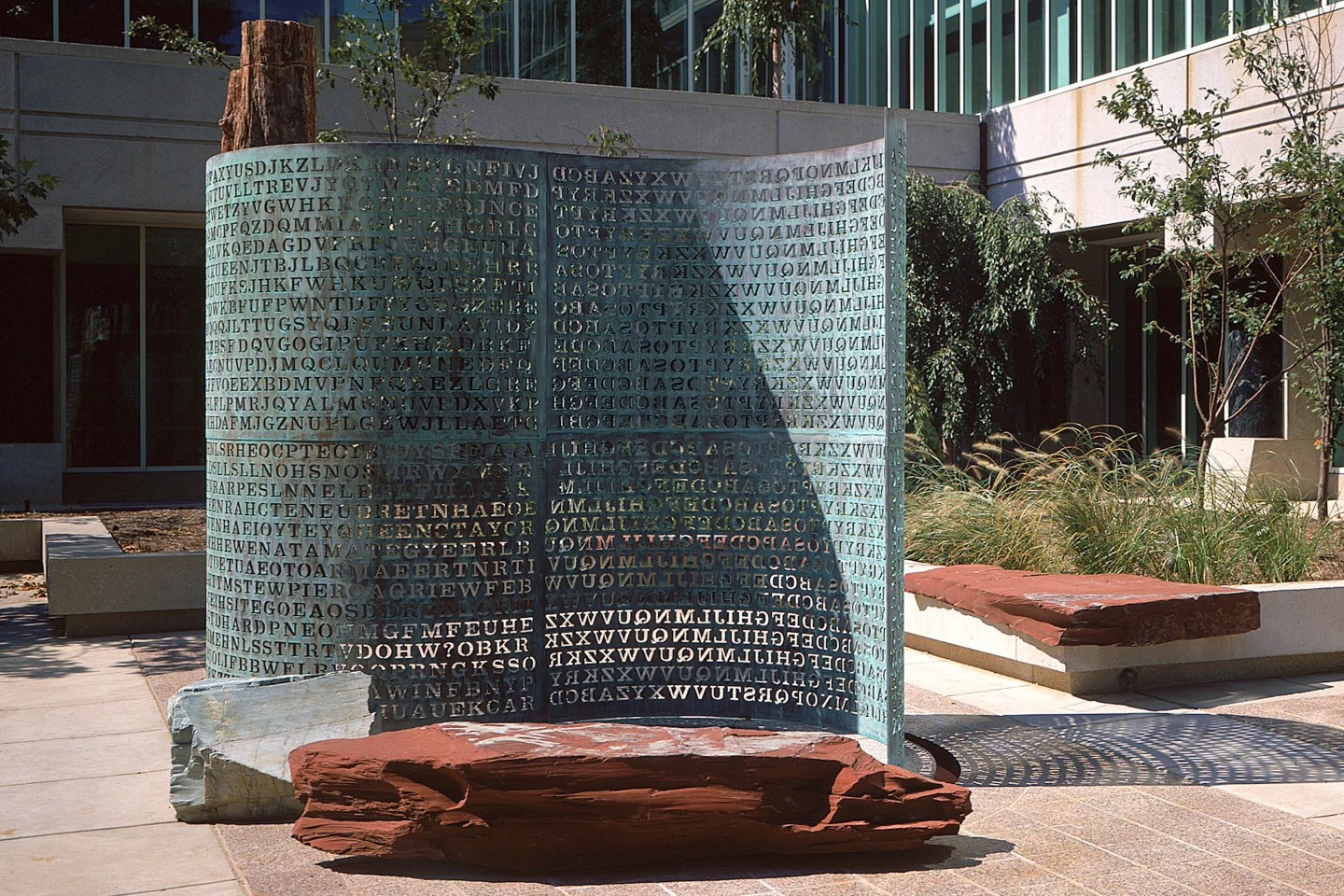
BOSTON (AP) — The last unsolved secret message encapsulated in a sculpture at CIA headquarters, known as Kryptos, has drawn fervent interest, culminating in an auction where vital information sold for nearly $1 million.
On Friday, RR Auction of Boston announced that the archive, belonging to artist Jim Sanborn, went for a jaw-dropping $963,000. The winning bidder will have a unique opportunity: a private meeting with Sanborn, who is known for his decades-long engagement with cryptography enthusiasts.
Kryptos, a striking ten-foot-tall sculpture, features four encrypted messages. While three have been deciphered—K1, K2, and K3—the fourth, known as K-4, remains an enigma, stumping experts and amateur cryptanalysts alike for 32 years.
The intricate work of art includes an array of staggered alphabets that help in decoding the messages, with K-4 challenging those who attempt to reveal its secrets. To sustain interactions with an ever-growing base of cryptography fans, Sanborn began charging a $50 fee for each inquiry he received regarding the K-4 challenge.
This decision prompted him to sell the secrets behind K-4 in a bid to ensure the confidentiality of the solution. The auction house also revealed plans to support the buyer in developing a “long-term stewardship plan” for the archive.
Sanborn, whose public sculptures include a memorial for a tragic mass shooting in Odessa, Texas in 2019, noted that the auction faced hurdles earlier when two sleuths discovered original scrambled texts within the Smithsonian. Yet, the sale pressed forward, leading to the offering of his entire archive rather than exclusive revelations about K-4.
“The important distinction is that they discovered it. They did not decipher it,” Sanborn emphasized. “They do not have the key. They don’t have the method with which it’s deciphered.”