In brief
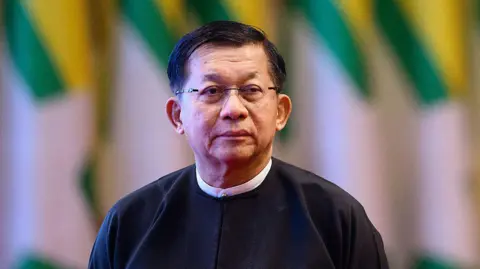
In a rapidly unfolding political situation in Myanmar, military chief Min Aung Hlaing has been nominated for the presidency as parliament convenes. The election was marred by the exclusion of significant opposition parties and widespread accusations of a sham vote. With violent conflicts still escalating, the junta's hold over the country raises concerns about continued repression and civil rights violations.
Myanmar's military chief Min Aung Hlaing has been nominated for the presidency as parliament convened on Monday, following a general election from which the biggest opposition parties were excluded. Min Aung Hlaing is certain to be chosen, as he was nominated in parliament alongside two loyalists who are very unlikely contenders for president. He has been sanctioned by many Western countries for leading a military coup five years ago. In the ensuing civil war, thousands of people have been killed and millions displaced. Large areas of the country remain under the control of armed opposition groups. The general elections, held between December and January, were touted by the junta as a pathway to peace, but were widely seen as a sham. Many popular parties were banned, and large areas of the country were not allowed to participate due to civil unrest. Despite this, the regime insists that the vote was free and fair. Around 90% of the members of Myanmar's new parliament owe their loyalty to Min Aung Hlaing, being either serving armed forces officers - who are guaranteed a quarter of the seats - or elected candidates for the military's own party. They plan to spend most of this week debating the choice of the next president, but it is now inevitable that the coup leader will get the role. Min Aung Hlaing has long desired the presidency, particularly after the military party's poor performance in the 2020 elections contributed to the coup that ousted the elected government led by Aung San Suu Kyi. However, ascending to the presidency requires him to relinquish command of the armed forces, carrying risks as there are senior commanders unhappy with his leadership. To mitigate losses, he has already appointed General Ye Win Oo, known for his brutal treatment of dissidents, to replace him. Nonetheless, there remains a risk that once Min Aung Hlaing is no longer in command of the military, he could lose some of his power. To maintain authority, he has also formed a new consultative council, which he will lead, potentially ensuring continued influence over military and civilian affairs. The new administration is expected to resemble an expanded version of the current military junta, with no signs of a change in the violent suppression faced by opponents since the coup.