In brief
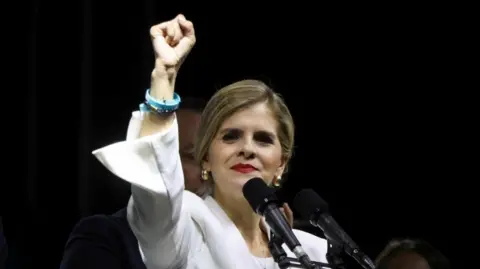
In a landmark election, Laura Fernández has emerged victorious as Costa Rica's next president, securing more than 48% of the votes in the first round and eliminating the need for a runoff. Aiming to tackle rising crime rates, Fernández plans to persist with the tough-on-crime strategies initiated by outgoing President Rodrigo Chaves, who endorsed her candidacy. She is set to take office on May 8 and intends to implement measures similar to those of El Salvador's President Nayib Bukele to combat drug-related violence.
The candidate for the governing conservative Sovereign People's Party, Laura Fernández, has won the presidential election in Costa Rica. With more than 88% of the votes counted, Fernández had over 48% of the votes, far ahead of the second-placed centrist candidate, Álvaro Ramos, who conceded defeat. Fernández ran on a promise to deepen the tough-on-crime approach of the outgoing President Rodrigo Chaves, who had handpicked her as his successor.Voters had voiced concerns about a surge in drug-related violence in the Central American country. The size of her vote share, which exceeded the 40% needed to win outright in the first round, means that there is no need for a run-off. Fernández will be sworn in on May 8.In her victory speech, the 39-year-old reiterated her commitment to the policies introduced by Chaves, under whose administration she had served as chief of staff.While Costa Rica has historically been regarded as one of Central America's safest countries, the rise of transnational criminal gangs has heightened security anxieties among the populace.During her campaign, Fernández stated her intention to adopt some of El Salvador's iron-fist crime policies under President Nayib Bukele, who enjoys high approval ratings due to his anti-crime efforts. She proposed declaring a state of emergency in gang-affected areas, completing the construction of a high-security prison modeled after a controversial facility in El Salvador.Acknowledging criticism regarding potential civil rights infringements, Fernández emphasized her administration would promote 'dialogue and national harmony, respectful and firmly based in the rule of law.' She took a combative stance against the opposition, blaming it for past legislative obstacles faced by her predecessor.Fernández's party secured 30 out of the 57 seats in parliament, providing her with a stronger legislative foothold than Chaves experienced. If necessary, she is prepared to declare a state of emergency in regions dominated by organized crime.Her election marks her as the second woman to serve as President of Costa Rica, following Laura Chinchilla's term beginning in 2010, indicating a progressive step in a nation that continues to navigate evolving democratic landscapes.