In brief
The remarkable growth of K-beauty is a story of cultural phenomena and economic triumph. What started with viral trends on social media has transformed Korean beauty products into a multi-billion dollar industry. This report delves into the ingredients, strategies, and pressures shaping the K-beauty landscape, highlighting its impact on global markets and consumer habits.
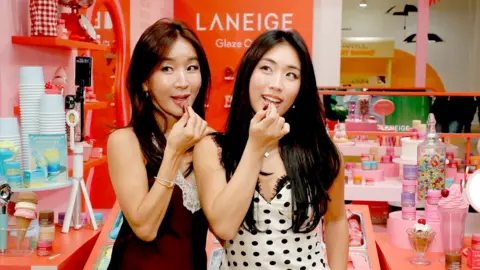
Who would have thought serums infused with snail mucin - the sticky substance they secrete - would become a part of skincare routines around the world? Well, it's happened - and the gooey elasticity is key, according to a viral TikTok challenge promoting the serum. It made its manufacturer, the small South Korean label CosRX, go global. It is now owned by Amorepacific, the country's biggest cosmetics company.The rapid spread of that sticky serum tells you just how wildly successful K-beauty has become. Fuelled by viral content and trends, it is one of the biggest industries in South Korea, where the pressure to look almost flawless has always been huge in a highly competitive society. The domestic market alone was valued at about $13bn (£9.6bn) in 2024, with sales of some products expected to grow at double-digit rates. And the rest of the world is just as obsessed with K-beauty - which is perhaps unsurprising given it's part of the Hallyu, or Korean Wave, which has made K-Pop and K-dramas a global phenomenon.K-beauty brands now occupy whole sections at global retailers - from Sephora to Boots to Walmart. In the first half of 2025, South Korea overtook France, the birthplace of modern cosmetics, to become the world's second-largest exporter of beauty products, after the United States.Search for 'Korean skincare' on TikTok, Instagram or YouTube and you'll be met with a deluge of content from influencers, some of whom have hundreds of millions of followers. They dissect ingredient lists, film unboxings and record 'Get Ready With Me' videos built around ideas such as 'glass skin', sheet masks and, of course, snail mucin.'At the heart of K-beauty's rise is a relentless pace of innovation,' says Liah Yoo, a beauty influencer and founder of the US-based K-beauty brand Krave Beauty. 'New formulations appear every few months, often designed to spark the next online obsession.' However, experts caution that constant exposure to skincare content online can fuel anxiety and excessive spending.'We are fully aware that excessive use or misuse of social media can lead to backlash,' stated Kim Seung-hwan, Amorepacific's chief executive, as brands aim to navigate the delicate balance between promotion and consumer wellness.In 2024, Amorepacific sold about $6.2bn of products, showcasing the industry's booming growth despite challenges such as high competition and thin profit margins. The South Korean government has recognized K-beauty as a strategic national asset, pledging support to bolster manufacturing and exports amid an evolving global landscape.