In brief
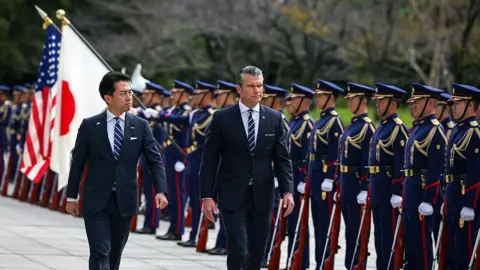
Defence Minister Shinjiro Koizumi said Japan needs to overhaul its pacifist security posture, citing rising Chinese threat and North Korean missile tests. He highlighted changes that let Japan sell or transfer lethal weapons to 17 partner nations, a first in half a century. Koizumi stressed deepening cooperation with the United States and like‑minded Indo‑Pacific states, saying multilateral deterrence is vital to prevent another war. The Japanese administration, led by Prime Minister Sanae Takaichi, has also pushed to revise Article 9 and increase defence spending to 2 % of GDP. Critics worry that formalising the Self‑Defence Forces could erode Japan’s peace‑keeping ethos, but Koizumi argues a strong defence is necessary for a volatile region.
Shinjiro Koizumi, Japan’s defence minister, warned the BBC that the country must "strengthen its defence capabilities" to prevent a new war in a region increasingly fraught with tension.
He said Japan’s strategy now centre‑pieces are boosting alliance ties with the United States and expanding cooperation with like‑minded countries, building a multi‑layered deterrence that is "critical for ensuring that no new war breaks out in this region".
Koizumi noted Japan’s recent policy shift that relaxes the decades‑old arms‑export rules, allowing the nation to sell or transfer lethal weapons to 17 countries it has formal agreements with, including the US and UK.
The defence minister highlighted talks with Australia, the Philippines, Indonesia and New Zealand about acquiring Japanese destroyers, marking a historic opening for defence‑equipment trade in the Indo‑Pacific.
He linked the reforms to the existing threat posed by China, whose territorial claims over the Senkaku/Diaoyu islands and frequent carrier patrols near the First Island Chain have intensified Japan’s security dilemma. Taiwan flashpoint Chinese carrier operations.
Koizumi stressed that while Japan’s constitution has not been amended, the security environment demands adjustment. “We need to adapt if Japan is to remain peaceful,” he said.
Despite his calls for stronger defence, he reiterated the importance of dialogue with China, noting a personal meeting with his Chinese counterpart and a desire for continued communication, especially after the Shangri‑La Dialogue where U.S. secretary Pete Hegseth urged burden‑sharing by allies.
The Prime Minister, Sanae Takaichi, has already pushed defence spending to 2 % of GDP, double the post‑war benchmark, and aims to invest in surface‑to‑ship missiles and unmanned drones.
Critics argue that formalising the Self‑Defence Forces could erode Japan’s pacifist identity, yet Koizumi believes that a clear and capable defence posture is essential for national protection. Anti‑war protests in Japan Historical view of Japan’s defence.
As Japan balances a robust defence with its traditional pacifism, the question remains: will a constitutional revision and enhanced military capabilities prevent future conflicts or spark new tensions?