In brief
Immigrant advocate Fernando Perez highlights the longstanding community practice of not opening doors to ICE officers unless they present a judge's warrant. However, a newly leaked memo reveals ICE's authorization for officers to forcibly enter homes without such warrants, sparking concerns about civil rights violations amid ongoing immigration enforcement under the Trump administration. With these shifts, experts warn of escalating risks for both immigrants and law enforcement.
SAN DIEGO (AP) — Fernando Perez, who has lived in the U.S. for 30 years since emigrating from Mexico, recounted that he has always faced immigration officers at his home but has never complied by answering the door. He cites awareness of the laws that protect him, emphasizing that unless there is a judge-signed warrant, he will remain behind closed doors.
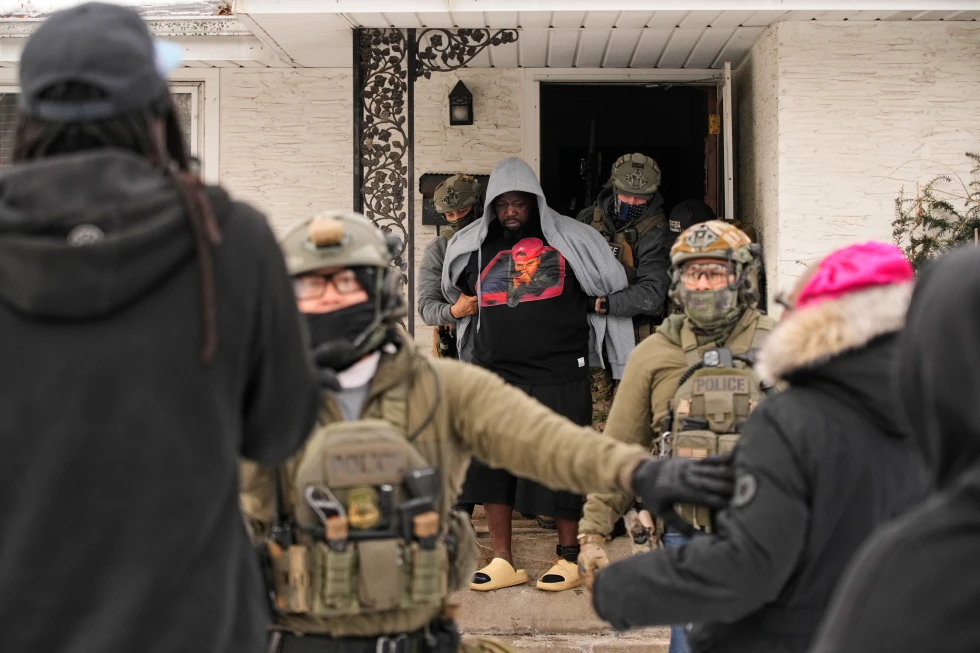
This practice has been widely accepted in immigrant communities as part of their legal rights. However, an internal memo from Immigration and Customs Enforcement (ICE), acquired by the Associated Press, suggests that there could be a seismic shift in how officers enforce immigration laws at residential locations. The memo implies that agents may enter homes forcibly, bypassing the traditional requirement for a judicial warrant—raising significant legal and ethical concerns about civil liberties.
Over the years, the community has developed around a fundamental rule: do not open your door to ICE agents unless they present a legal warrant. In light of this, agents have had to adapt, conducting many of their operations in public settings and often waiting long hours for an individual to inadvertently step outside.
The atmosphere of fear surrounding these operations has been intensified recently, compounded by the Trump administration’s focus on mass deportation campaigns, which have reshaped the tactics used in targeted immigrant communities. For instance, reports of ICE officers forcibly entering homes under mere administrative warrants are alarming and represent a departure from previously respected privacy protections as delineated in the Constitution's Fourth Amendment.
Democratic U.S. Senator Richard Blumenthal has condemned the new directives, demanding transparency and accountability from the Department of Homeland Security.
‘Every American should be terrified by this secret ICE policy authorizing its agents to kick down your door and storm into your home,’ Blumenthal stated, calling for Congressional hearings to discuss the implications of these actions.
Moreover, law enforcement experts warn that such aggressive tactics could inadvertently endanger lives, potentially leading to situations where residents react violently to unannounced intrusions due to stand-your-ground laws or miscommunication about the intentions of intruders.
As the implications of this memo unfold, immigrant rights advocates are mobilizing, emphasizing the fundamental need for individuals to remain informed about their legal rights. Training sessions that emphasize not complying with home entry requests unless appropriate warrants are presented have become critical components of community outreach.
‘The memo is quite disturbing,’ remarked Ahilan Arulanantham of UCLA’s Law School as he reflected on how these changes might affect the safety and security of immigrant families.
As this situation develops, communities across the nation remain vigilant and aware of their rights, finding their voices in the face of increased scrutiny and fear in their living spaces.