In brief
Hungarian Prime Minister Viktor Orban visited Moscow for talks with President Vladimir Putin just days before crucial discussions on the Ukraine war are set to occur. This meeting underscores Orban's status as one of Putin's key allies in Europe, prompting frustration among NATO and EU partners. As Hungary faces its upcoming parliamentary elections, Orban's dealings with Russia may have significant implications for energy supply and his political future while he continues to challenge EU directives.
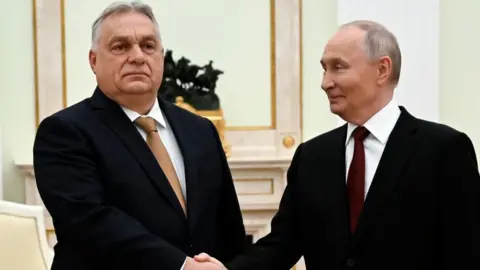
Hungarian Prime Minister Viktor Orban has met President Vladimir Putin in Moscow, just days before Russia gears up for talks stemming from a U.S. push to resolve the ongoing war in Ukraine.
Long recognized as one of Putin's closest allies in Europe, Orban has repeatedly drawn ire from his NATO and EU colleagues by undermining their collective stance against Russia. During their meeting, Putin acknowledged Orban's 'balanced position' regarding the situation in Ukraine, as noted by Russian state media.
Putin expressed gratitude to Orban for proposing Budapest as a potential venue for a dialogue between the U.S. and Russia, reflecting on Trump's previous interest in fostering good relations through the Hungarian Prime Minister.
Last month, discussions for a Budapest 'peace summit' were suggested but were stalled when Russia declined to yield on critical demands regarding the war's resolution.
With Hungary facing parliamentary elections in April 2026, polls indicate a potential upset for Orban's party, Fidesz, which has held power for 15 years. Hosting a Trump-Putin summit in Budapest could bolster his chances for reelection.
Orban's visit to Moscow is framed as part of a broader strategy to secure Russian energy supplies for Hungary, Slovakia, and Serbia amidst winter energy needs. Earlier this month, he secured exemptions from U.S. sanctions on Russian fuel as long as he remains in power.
Since the full-scale invasion of Ukraine in 2022, Orban has positioned himself as a proponent of peace, pushing back against EU strategies aimed at limiting imports of Russian oil and gas.
While acknowledging plans for purchasing U.S. liquefied natural gas and nuclear fuel, the Prime Minister is attempting to maintain favorable relations with Russia, where the majority of Hungary's energy needs are sourced.
Orban’s advocacy for strong ties with Russia includes a call for direct EU negotiations with the Kremlin while opposing EU aid to Ukraine and the repurposing of frozen Russian assets for Ukraine's defense.
This balancing act comes as Hungary is under pressure to eliminate Russian energy imports by 2027, leveraging any agreements made in Moscow to challenge EU restrictions and interests.
Overall, this meeting between Orban and Putin highlights the deeply intertwined energy and political strategy at play, with implications that resonate not only for Hungary's domestic politics but also for broader EU-Russia relations.