In brief
Since Monday, Azerbaijan's Ministry of Education began enforcing new school uniform guidelines that effectively ban hijabs, prompting rare street protests in Baku and southern districts. Teenagers confronted school staff, sparking viral footage and a broader public backlash. Turkish officials and Muslim leaders have publicly decried the restrictions, leading to demonstrations outside Azerbaijan's embassy in Ankara. The government faces arrests, internet censorship and growing criticism as the issue spills over into regional geopolitics.
School headscarf ban sparks rare protests in Azerbaijan and row with Turkey
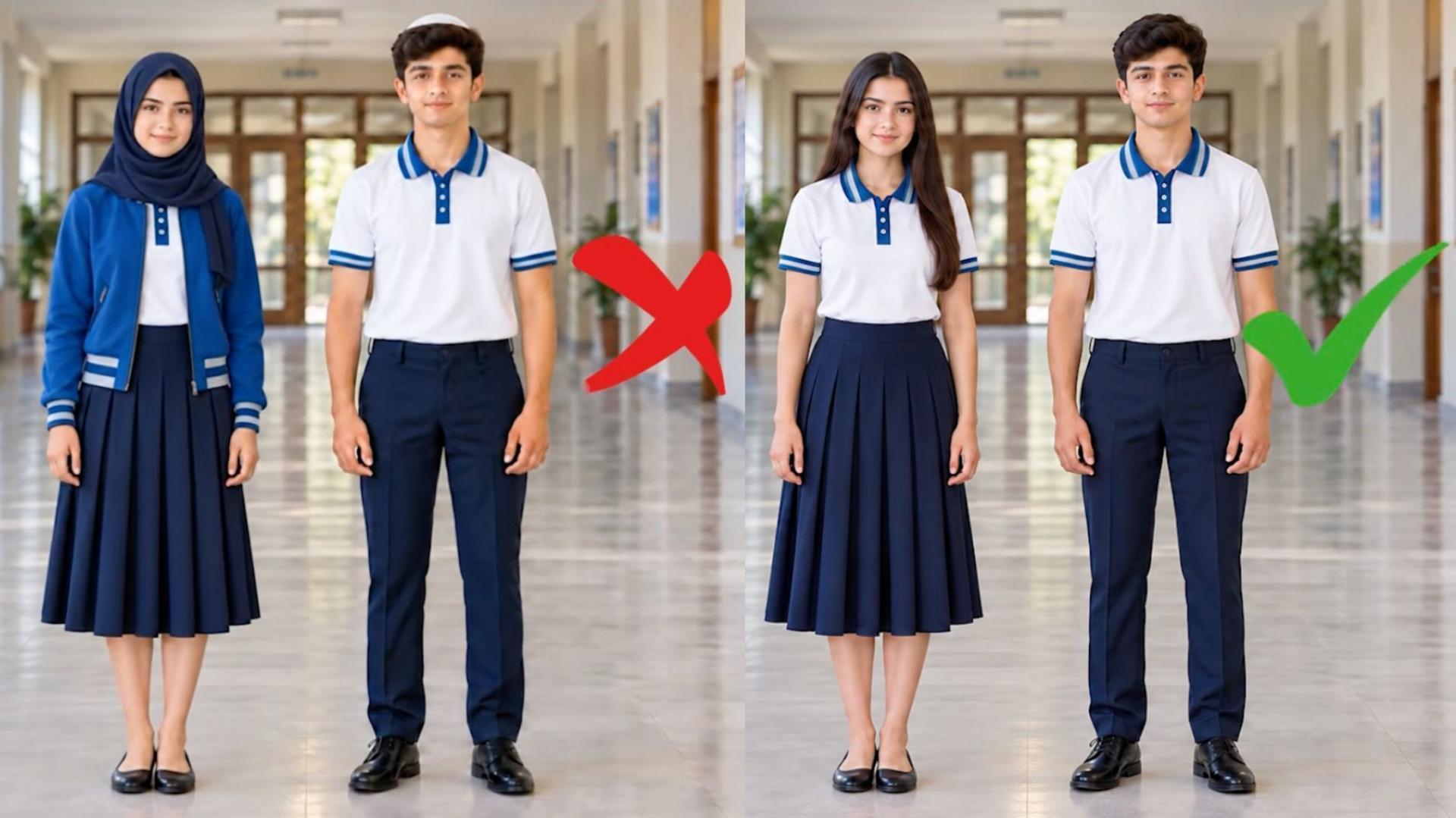
Image source: Azerbaijan education ministry
"You are telling me, I can't come to school?" a teenage girl in a navy‑blue Islamic headscarf says to a staff member at the entrance of her school, as footage filmed inside the school was shared across social media. She was backed by a group of girls in hijabs who cheered her on as she asked: "Why should I have to give up my religion?"
The new guidelines, approved on 21 September, ban clothing that the government claims contradicts the "principle of secularism in education". Though the hijab is not mentioned specifically, the Ministry has already turned away female pupils wearing hijabs. A morning after the rollout, demonstrators gathered outside state schools in Baku and southern districts such as Masally and Jalilabad. The protests are rare in the oil‑rich nation that governs 10.5 million people.
Azerbaijan is officially secular but has been tightly controlled by President Ilham Aliyev since 2003, who has jailed opposition politicians and independent journalists. The country sits between Turkey to the north and Iran to the south, both of which exert cultural influence. While Azerbaijan is largely Shia and Turkey mostly Sunni, the new rule has strained relations with Ankara.
Interior officials detained 37 people on Monday for attempting to obstruct the new rules, describing the actions as a "gross violation of public order". An online platform called "Let Leyli Go to School" was launched by activist Ilkin Huseynov, offering free tutoring for pupils barred from classes. He has since vanished and his Instagram page remains inaccessible.
Following the protests, Turkish officials—including Prime Minister Recep Tayyip Erdoğan’s adviser Ökya Saral—deemed the restrictions "unacceptable" and urged Baku to reverse them. Protesters positioned outside the Azerbaijani embassy in Ankara and the consulate in Istanbul, with some groups linked to Islamist movements.
President Aliyev and the New Azerbaijan Party denounced the comments as "openly defamatory" and warned against foreign interference in internal affairs. The dispute may also be tied to Azerbaijan’s close ties with Israel, which supplies weapons and purchases oil, challenging Turkey’s stance on the conflict in Gaza.
Throughout the unrest, social media platforms such as Instagram and TikTok have reported accessibility issues, adding further strain on the protest movement and emboldening calls for internet freedom. The situation remains fluid as Azerbaijan balances religious tradition, secular law, and international diplomacy.