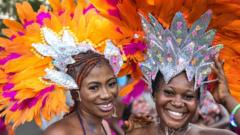
This past weekend, Nigeria's southern port city of Calabar pulsated with life as Christmas revelers gathered for its annual carnival, often referred to as "Africa's biggest street party." The event attracted a massive turnout, with estimates suggesting up to two million participants celebrating in the capital of Cross River State.
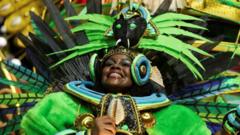
The parade featured an array of dazzling floats and performers representing various ethnic groups across Nigeria, showcasing the country's rich cultural diversity. The carnival spans the entire month of December, drawing in Hundreds of thousands of partygoers who come to revel in the festivities.
This year, approximately 14 bands dazzled the crowd with vibrant performances, each competing for top honors. Festival-goers danced exuberantly to the vibrant beats of Afrobeats music emanating from towering speakers throughout the event, energizing the joyful atmosphere.
Notably, this year's carnival marked its 20th anniversary, leading to an even more extensive display of unique designs and creative costumes. Attendee Grace Job expressed her excitement, stating, "The energy is so much." The carnival catered to a broad audience; among the revelers was a troupe from the University of Calabar, proudly donning costumes featuring the institution's logo.
Some costumes poignantly alluded to the city's historical ties to the Atlantic slave trade. One featured representation of "manillas," brass bracelets used as currency by Portuguese traders from the 16th to the 19th centuries, while another depicted a giant British West Africa penny, symbolizing the colonial era preceding Nigeria's independence in 1960. As 25-year-old dancer Rejoice Elemi articulately expressed, "Everyone is trying to showcase the tradition and the culture."
The festive spirit continued at a stadium concert in Calabar, highlighting performances by renowned Nigerian artists Runtown and Iyanya. Calas Vegas earned the esteemed title of best carnival band, marking their second consecutive victory in this category.
Cross River State officials regard the carnival as a pivotal opportunity to attract not just local attendees but also visitors from the diaspora, further elevating Nigeria's cultural presentation on a global platform.