In brief
The European Union commended Spain for its quick response to the surge of migrants who crossed into Ceuta between 30 and 31 July, with an estimated 70,000 already returned to Morocco. Despite criticism from Italy and other allies—who halted Schengen travel with Spain—the EU emphasized solidarity and called for a united European response to the crisis. Madrid pledged to cooperate with Morocco and provided 25 million euros for unaccompanied minors. EU officials also offered emergency funding to strengthen Spanish borders and noted the event tests Europe’s resilience. The incident has highlighted the need for stronger border controls and coordination across member states.
EU praises Spain’s swift handling of the Ceuta migrant crisis.
Following an estimated 70,000 migrants who crossed the North‑African Spanish enclave between 30 and 31 July, Spain’s interior minister, Fernando Grande‑Marlaska, reported that many have since been returned to Morocco, though at least 75 deaths were recorded on the Spanish side and 11 in Morocco.
The EU’s interior ministers met on Tuesday to discuss the situation. President of Ireland’s Justice Minister Jim O’Callaghan, chair of the meeting, said the bloc stood in solidarity and that a united European response was required. Despite criticism from Italy and its allies—who described the footage from Ceuta as “shocking” and suspended Schengen travel with Spain—the EU reportedly offered Spain emergency financial support to bolster its borders.
Madrid’s prime minister, Pedro Sánchez, dismissed the accusations, calling them driven by prejudice and political interest. He emphasized that Ceuta is not part of the Schengen zone and that the crisis had not compromised the EU’s border system. German and Dutch officials echoed support, while Finland and Denmark backed Italy’s suspension of Spain’s Schengen right.
Interior Minister Grande‑Marlaska assured that the rights of all migrants, especially unaccompanied minors, were respected and pledged roughly €25 million for child care. Madrid also pledged to work closely with Moroccan authorities to prevent further violations.
EU commissioner Magnus Brunner called the event a “test” of European resilience and border security, noting that the crisis had successfully passed the test. He added that the EU had offered Spain emergency aid and urged Italy to lift additional controls as soon as possible.
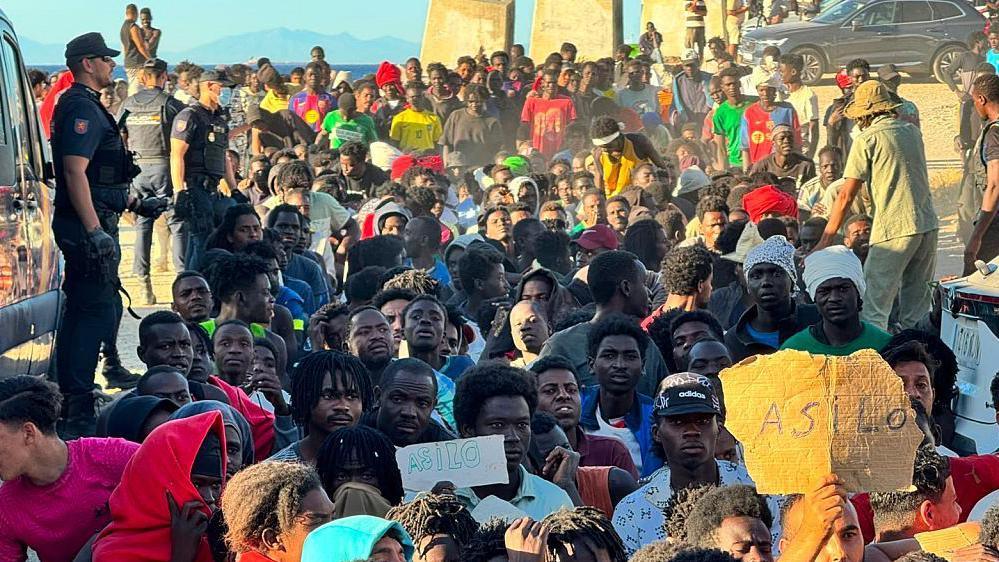
Spokes about the civic response documented how migrants were congregating on Ceuta’s beaches, holding signs calling for asylum, and awaiting aid. Some were seen sleeping on the coast and in city streets, and around 800 children were reported in local facilities.