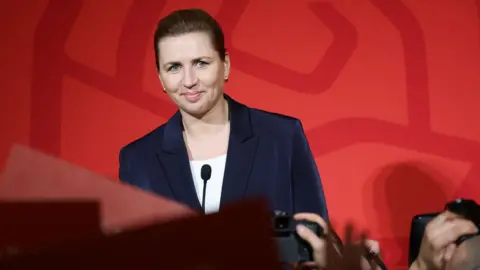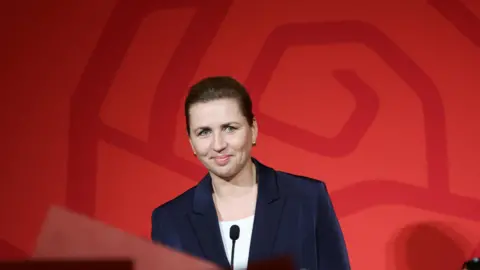
Led by Prime Minister Mette Frederiksen, Denmark's Social Democrats have won the most votes in the country's general election, but have failed to secure a majority, after the party's weakest showing in more than a century. Taking 21.9% of the vote, the Social Democrats, who have governed since 2019, finished first in the recent election. Despite holding 38 parliamentary seats, they remain the largest party but lack enough support to claim outright victory.
Inside Denmark's parliament, Christiansborg, Social Democratic supporters cheered and applauded Frederiksen, who expressed regret for not achieving a better result, saying, I'm sorry that we did not get more votes. I had also hoped for a better result. However, she concluded her speech on a positive note, emphasizing that the Social Democrats remain the favorite among Danes.
Frederiksen still has a chance to stay in power for a third term; however, Denmark typically operates under coalition governments, which means tough negotiations lie ahead. Various political parties participated in this closely contested election, with the left-wing "red bloc" securing a small lead over the right-wing "blue bloc." Neither bloc has achieved the 90 seats needed for a majority in Denmark's 179-seat parliament.
Statements from various party leaders indicate that forming a coalition will be complex. The Moderates party, holding 14 seats, is viewed as a potential kingmaker in these negotiations, while Frederiksen's rivals have ruled out possible partnerships. Political analysts suggest a likely center-left government may form, comprising the Social Democrats, Red-Greens, and the Moderates.
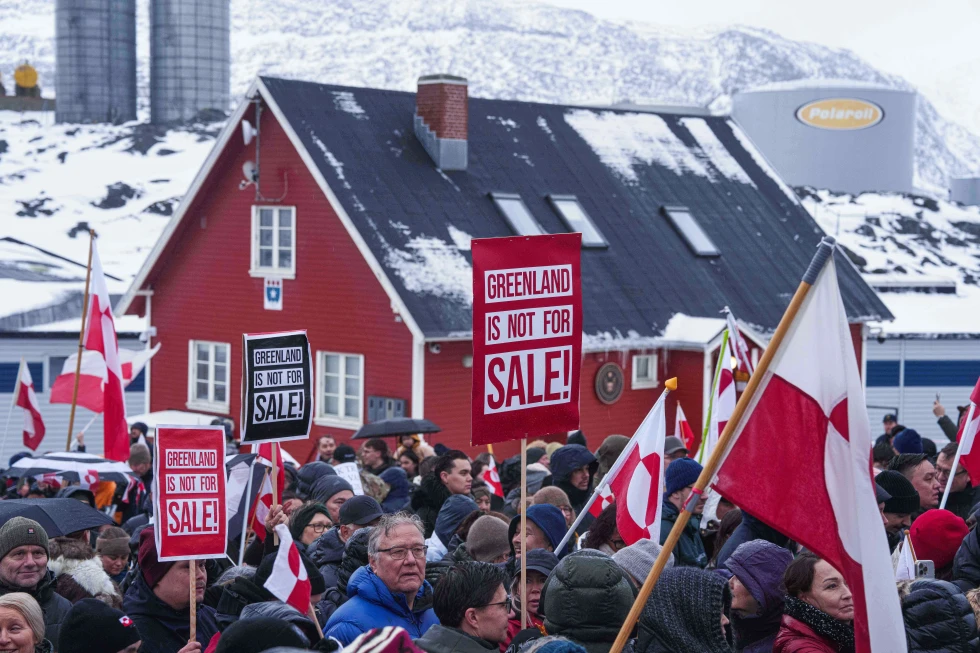
This election follows growing tensions surrounding geopolitical issues, especially concerning Greenland, but domestic issues—such as the economy and living costs—took center stage during the campaign. Frederiksen's early election gamble aimed to leverage her handling of international crises, but local concerns ultimately dominated voter sentiment.
Inside Denmark's parliament, Christiansborg, Social Democratic supporters cheered and applauded Frederiksen, who expressed regret for not achieving a better result, saying, I'm sorry that we did not get more votes. I had also hoped for a better result. However, she concluded her speech on a positive note, emphasizing that the Social Democrats remain the favorite among Danes.
Frederiksen still has a chance to stay in power for a third term; however, Denmark typically operates under coalition governments, which means tough negotiations lie ahead. Various political parties participated in this closely contested election, with the left-wing "red bloc" securing a small lead over the right-wing "blue bloc." Neither bloc has achieved the 90 seats needed for a majority in Denmark's 179-seat parliament.
Statements from various party leaders indicate that forming a coalition will be complex. The Moderates party, holding 14 seats, is viewed as a potential kingmaker in these negotiations, while Frederiksen's rivals have ruled out possible partnerships. Political analysts suggest a likely center-left government may form, comprising the Social Democrats, Red-Greens, and the Moderates.
This election follows growing tensions surrounding geopolitical issues, especially concerning Greenland, but domestic issues—such as the economy and living costs—took center stage during the campaign. Frederiksen's early election gamble aimed to leverage her handling of international crises, but local concerns ultimately dominated voter sentiment.