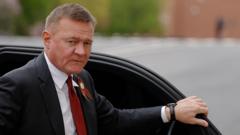
In a startling turn of events, the beginning of the week in Russia has been overshadowed by the shocking news of former transport minister Roman Starovoit’s death. Dismissed by President Vladimir Putin on Monday morning, Starovoit was later found dead in a Moscow park with a gunshot wound to the head, a pistol located beside him. Authorities are treating the incident as a presumed suicide.
The tabloid Moskovsky Komsomolets expressed the astonishment felt by many, pointing out the rarity of such an occurrence in post-Soviet Russia, with the last known incident dating back over thirty years to the bitter end of communist rule. The Kremlin has largely remained silent on the matter, but Putin’s spokesperson Dmitry Peskov acknowledged the shock surrounding the situation during a conference call with reporters.
Media reports have been rife with speculation regarding Starovoit’s resignation and subsequent death, particularly linking it to a controversial construction project for defensive fortifications along Russia's border with Ukraine, initiated during his tenure as the Kursk regional governor. The project faced serious scrutiny after Ukrainian forces seized territories in the Kursk region last year, raising suspicions that Starovoit might have been gearing up to face allegations of large-scale fraud, similar to those bringing down his successors.
Political analysts are drawing parallels between Starovoit’s fate and historical instances of desperation among government officials in authoritarian regimes. Professor Nina Khrushcheva highlighted the environment of fear that has seemingly permeated the political landscape in Russia, suggesting that the fear of lengthy imprisonment may push officials into tragic decisions.
Despite the gravity of the situation, state media has chosen to downplay the incident. Following Starovoit’s dismissal and death, the main evening bulletin on state-run Russia-1 was issued with minimal mention of the events, instead focusing on the appointment of a new transport minister. This careful management of news indicates a Kremlin aware of the significant influence media holds over public perception.
Ultimately, Roman Starovoit’s untimely death serves as a grim reminder of the perilous nature of Russian politics today—where alignment with the regime is paramount, and the stakes for those at the top have never been higher.