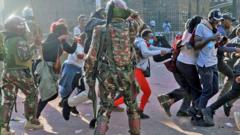
As outrage surges in Kenya, human rights groups are escalating calls for investigations into police and military actions following a BBC Africa Eye exposé detailing the fatal force used against protesters in a tax increase demonstration last June. The documentary highlighted the shooting deaths of three demonstrators by security forces outside the parliament on June 25, 2024, amplifying public outcry for accountability and justice.
Prominent organizations, including Amnesty International and the Kenya Human Rights Commission (KHRC), assert that the identified officers in the documentary must be held accountable. The government spokesperson, Isaac Mwaura, however, denounced the documentary—claiming it was biased—and emphasized the importance of restoring order in society while acknowledging that protestors had valid concerns.
The BBC’s investigative report utilized extensive open-source data to pinpoint a policeman and a soldier involved in the shootings, revealing violent confrontations with unarmed protesters. The Kenyan government has cited a significantly lower death toll of 42, yet Amnesty International reports 65 fatalities and numerous enforced disappearances resulting from the protests against the controversial finance bill, which aimed to raise $2.7 billion.
In a twist of events, the BBC canceled a scheduled screening of the documentary in Nairobi under governmental pressure, expressing disappointment at being unable to share the revealing footage. Nevertheless, the public can still access the documentary on social media platforms.
Amnesty International noted that the BBC’s findings corroborate allegations of excessive force deployed against demonstrators, urging the police and military to transparently communicate action steps related to the report’s findings. Online, citizens are echoing demands for accountability, emphasizing the need for a public inquiry into the government’s handling of the protests.
Responses within Parliament have varied, with some members denouncing the documentary as foreign interference, while others, like MP Millie Odhiambo, have defended the need for media freedom and sober governmental accountability without censorship. The Independent Policing Oversight Authority (IPOA) is reportedly investigating 60 deaths linked to the protests, underscoring the complexities of the ongoing crisis.
In these turbulent times, there are renewed fears that heightened criticisms of the government could incite further unrest, as Kenya navigates the contentious aftermath of the protests and the broader implications of police accountability. Lawmakers continue to call for a comprehensive investigation, while civil society remains vigilant in demanding justice for the victims.