In brief
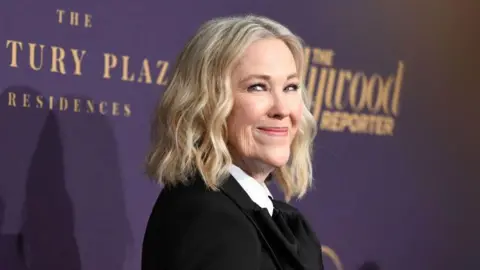
Catherine O'Hara, the acclaimed actress known for her roles in 'Schitt's Creek' and 'Home Alone', has died at the age of 71. Her death certificate reveals she passed away from a pulmonary embolism linked to long-term rectal cancer. O'Hara was receiving treatment for cancer since March 2025. Tributes from fellow actors express deep admiration for her talent and character.
The beloved actress Catherine O'Hara has died of a pulmonary embolism, with tributes pouring in from colleagues and fans.
Award-winning actress Catherine O'Hara died in a Los Angeles hospital on January 30, aged 71. A death certificate confirmed she passed away due to a pulmonary embolism, a condition where a blood vessel in the lungs is blocked by a blood clot. It also identified rectal cancer as a long-term health issue, which she had been receiving treatment for since March 2025.
Tributes have flowed in for the Canadian actress, who was celebrated for her roles in the Emmy-winning comedy 'The Studio' and the hit video game adaptation 'The Last of Us'.
O'Hara Remembered
Actor and creator of 'The Studio', Seth Rogen, expressed his grief, describing O'Hara as hysterical, kind, intuitive, and generous. He remarked, We're all lucky we got to live in a world with her in it.
Pedro Pascal, who worked with O'Hara on 'The Last of Us', paid tribute on Instagram, stating, Oh, genius to be near you. Eternally grateful. There is less light in my world.
O'Hara starred in six seasons of 'Schitt's Creek', earning an Emmy for best comedy actress. Show creator Eugene Levy expressed his sorrow, stating, Words seem inadequate to express the loss I feel today.
Daniel Levy, who played her on-screen son, described her as family and shared that he would cherish the memories they made together.
Macaulay Culkin, who acted alongside O'Hara in the holiday classics 'Home Alone' and 'Home Alone 2', shared an emotional message on Instagram, writing, Mama. I thought we had time. I wanted more. I love you. I'll see you later.
Catherine O'Hara is survived by her husband Bo Welch, sons Matthew and Luke, and her six siblings.
What is a Pulmonary Embolism?
A pulmonary embolism is a life-threatening condition characterized by the blockage of a blood vessel in the lungs by a blood clot. Symptoms often include sudden difficulty in breathing, chest pain, and coughing up blood. It necessitates immediate medical intervention.