In brief
With both hope and apprehension, artists are determined to maintain creative freedom as the nation enters a new era.
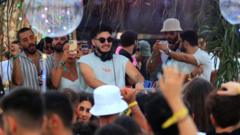
In the vibrant heart of Syria, the pulse of musical creativity beats stronger than ever, but the new leadership under Hayat Tahrir al-Sham (HTS) sparks both intrigue and concern among local musicians. After nearly 14 years of civil war, which ironically fostered the emergence of a flourishing electronic music scene and an energized heavy metal culture, artists now find themselves contemplating the future under an Islamist regime with roots in extremist ideologies.Musicians like DJ Maher Green are taking a cautiously optimistic approach. “We have to be organized before we go to them, because they are so organized,” he stated, expressing a desire to engage with HTS rationally. “We’re willing to talk to them with a real proposal.” During the tumult of war, musicians established crucial interactions with security services, creating a space for a vibrant nightlife that flourished amidst chaos.Contrastingly, the Assad regime held a more oppressive view of heavy metal and other non-conformist music, often associating it with Western influences and subversion. “I went to the intelligence force maybe three times, just because I sold this kind of music,” recalled Nael al-Hadidi, a music shop owner, detailing the surveillance he faced prior to the war. However, as political tensions escalated, the regime became preoccupied with larger upheavals, leading to a cultural renaissance for heavier genres.Despite the growth of this scene, the war has left a significant void as many musicians were forced to flee, relocating primarily to Europe. Wajd Khair, a noted musician, put down his craft in 2011 due to the violent chaos. After years of silence, he has returned to music but now questions the impact of HTS's dominance on artistic expression. "We have to be more bold,” he asserted, emphasizing the need to assert their presence in the music landscape. The future remains nebulous for Syria's artists, especially following reports that HTS had briefly closed the Opera House, a cultural icon in Damascus. While officials labeled this a false alarm and assured that it would reopen, fears linger about the aftermath of HTS’s control. Some signs indicate a potential allowance for artistic expression; after HTS’s takeover, state television initially broadcasted Islamic chanting before retracting it due to public backlash.Safana Bakleh, a choir director, remains undeterred in her commitment to the arts, leading groups to sing revolutionary songs. “It’s maybe not going to be an easy path,” she acknowledged, but she rallied support, insisting artists and intellectuals must lead the cultural fight for Syria's future.There is a palpable desire among musicians to prevent an exchange of one form of authoritarianism for another—this time under religious pretexts. Green warns against HTS’s strictly religious cultural agenda, which he views as a regression. “We have evolved so much. We have so much mixed culture,” he said, advocating for the survival and recognition of Syria’s diverse musical heritage.As the nation's artists prepare for dual navigation—advocating for their rights while wary of the tightening cultural reins—they remain steadfast in their resolve to reclaim a vibrant cultural scene and establish a significant artistic presence in a new Syria.