In brief
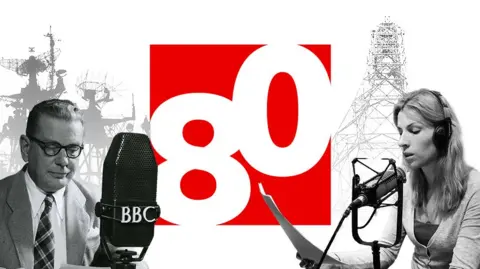
BBC Russian celebrates 80 years of defiance against censorship in Russia, adapting to changing restrictions from the Soviet era to the present. The service has faced jamming of broadcasts, website blocks, and journalist persecution but continues to reach millions, especially in times of crisis.
The Kremlin is tightening its grip over what Russians can do and see online, making it harder for outlets like the BBC to reach their audiences.
For the past 80 years, BBC Russian has sought to bypass those restrictions, which for decades featured jamming of its short-wave radio broadcasts and now involve blocking its website.
The latest restrictions in Russia have included widespread mobile internet outages and a reported plan to block the Telegram news and messaging app.
On 24 March 1946, the BBC started its first regular radio broadcast in the Russian language aiming at giving listeners behind the Iron Curtain in the Soviet Union an alternative to state propaganda and a tightly controlled cultural scene.
By 1949, jamming of the signal was already the norm. For almost half the 20th Century, Soviet people had to jump through hoops to listen to foreign broadcasts, remembers Natalia Rubinstein, an ex-BBC presenter and former resident of Leningrad.
We really wanted to know what was being hidden from us, she says, recalling how people used to take their radios into the woods to escape jamming signals. I still have this picture before my eyes: a person leaning on a tree, with ski poles next to him, listening to the radio somehow nestled on their chest, she added.
Jamming of foreign broadcasts was pioneered by Nazi Germany during World War Two, and during the Cold War, the BBC's Russian-language service provided a mix of news, Western music, and even quizzes, marking a significant source of alternative information.
As of March 2022, at the onset of Russia's invasion of Ukraine, BBC Russian's audience surged, showcasing its vital role in times of crisis. However, ongoing internet censorship has forced the service to adapt, setting up offices abroad while navigating the risks of being labeled as foreign agents.
Under the current climate, BBC Russian continues to maintain an audience of millions, proving the need for uncensored journalism amid an increasingly restrictive media landscape in Russia.