In brief
Tessa Moura Lacerda fought for years to correct her father's death certificate, revealing the painful legacy of Brazil's military dictatorship. As Tessa finally acknowledged her father's death, her story intertwines with the ongoing quest for justice among families who suffered under a regime that tortured and disappeared many.
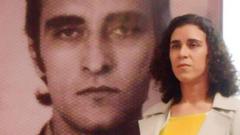
In a poignant moment that encapsulates decades of struggle and trauma, Tessa Moura Lacerda, a philosophy professor at the University of São Paulo, stood outside a government office in August 2019, clutching a long-fought-for document. The death certificate of her father, Gildo Macedo Lacerda, now reflected the truth: "unnatural, violent death caused by the State to a missing person [...] in the dictatorial regime established in 1964."Gildo, arrested at the age of 24 during Brazil's brutal military dictatorship, died under torture in 1973, a victim among 434 documented cases of killings or disappearances. As part of a left-wing group advocating for democracy, both Gildo and Tessa’s mother, Mariluce, were targeted; Mariluce was tortured but released, while Gildo vanished for days before his death was confirmed in a military facility.Although the truth commission found evidence of his death in custody, lies spread through the media obscured the reality, perpetuating a narrative that Gildo was shot in a street altercation. For years, his death certificate went unfilled, reflecting the family’s unresolved grief. Tessa was left wrestling with the psychological scars of a father she never met, plagued by trauma that manifested as nightmares and fears for her own children."It's like I have a corporal memory of this fear," Tessa remarked. The correction of her father’s death certificate became not just a personal closure for her, but a pivotal act for all victims of state violence during the dictatorship. In December, Brazil announced the rectification of records for all recognized victims—an acknowledgment that had been eluded for too long.The fight for recognition is timely, as a renewed focus on the dictatorship has emerged in contemporary discussions prompted by creative works like the film I'm Still Here, which follows the plight of those whose loved ones are still unaccounted for. With a narrative that resonates with the continuing societal injustices in Brazil, Tessa and other families confront an ongoing struggle for historical acknowledgment.As Brazil grapples with political polarization, recent years have seen a resurgence of support for military rule, raising concerns about the rewriting of history and the erasure of truths. The struggle is deeply felt by families like Tessa's and those of figures like Helenira Resende, another victim of the regime whose family has fought to find closure.As Tessa states, "Brazilian society needs to recognize this history so these deaths weren't in vain." For her, the journey to bury her father continues—wrapped in a collective trauma that refuses to fade without acknowledgment and justice. "I will not stop fighting until the end of my days," she vows.