In brief
South Korea has recently enacted the Tattooist Act, allowing non-medical professionals to legally practice tattooing after more than three decades of restrictions. This change comes in response to demands from the tattoo community, as practitioners previously faced severe legal penalties. Despite the law's passage, concerns regarding public perception and health risks remain prevalent, with the statute taking effect in two years and requiring future tattoo artists to meet certain qualifications.
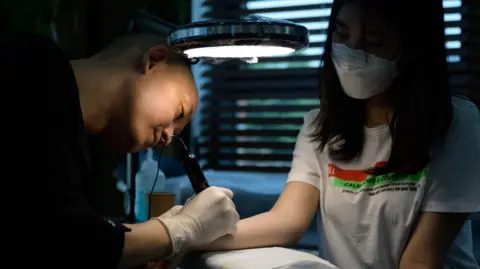
South Korea has legalised tattoo artistry by non-medical professionals for the first time in more than 30 years, following a campaign by members of the profession to work without fear of prosecution or harassment.
Though tattoos are commonplace in the east Asian nation, offering them has been limited to medical professionals following a 1992 Supreme Court ruling.
However, after the passing of the Tattooist Act by the General Assembly, non-medical professionals will be able to obtain a licence, marking a historic shift for the industry.
Lim Bo-ran, president of the Korea Tattoo Federation, expressed immense gratitude upon hearing the news, saying: I can't speak because it feels like a dream. I am truly grateful.
Before this regulation, anyone offering tattoos without medical credentials faced up to five years in prison or hefty fines.
Although the tattooing prohibition is being lifted, the law has sparked opposition from the medical community, which warns of potential health risks.
The new law, which will not be implemented for two years, will require aspiring tattoo artists to pass a national exam and complete safety training.
While the acceptance of tattoos is growing, societal stigma remains, indicating that full normalization of tattoo culture in South Korea may take time.