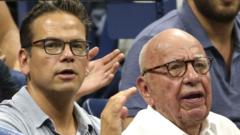
In a high-profile case reminiscent of the hit series "Succession," Rupert Murdoch's attempt to alter a family trust has been thwarted by a Nevada court commissioner. The ruling denied the billionaire's request to amend the trust established in 1999, aimed at granting control of News Corp and Fox News to his eldest son Lachlan without the influence of his siblings Prudence, Elisabeth, and James.
According to reports, the commissioner found that Mr. Murdoch and Lachlan had acted in "bad faith" and described their efforts as a "carefully crafted charade." This legal battle illuminates the ongoing discord within the Murdoch family regarding succession and control of their extensive media empire.
"We welcome Commissioner Gorman's decision and hope that we can move beyond this litigation to focus on strengthening and rebuilding relationships among all family members," said a spokesperson for the other Murdoch children. However, Adam Streisand, Murdoch's lawyer, expressed disappointment and indicated plans to appeal the ruling.
The family's dynamics have drawn parallels to HBO’s "Succession," leading to discussions among the siblings about their father's eventual passing. This reflection on familial and corporate legacy has been complicated by differing views on the direction of the media empire.
Nevada, known for its confidentiality in legal matters, has kept the proceedings largely private. Under trust agreements, Rupert has held four out of eight family votes concerning corporate governance, while his children have had one each. The commissioner’s recent ruling doesn’t finalize the matter; a district judge may still review the case and potentially reach a different conclusion in the coming weeks or months.
While financial interests are not at the core of this dispute, the struggle for control and influence over the future of the Murdoch media empire continues to unfold behind closed doors. Murdoch's family legacy remains a subject of intrigue and speculation, with the implications of this case reverberating through both media and public discourse.