
In brief
Health officials report widespread respiratory issues linked to a severe sandstorm, raising concerns over increasing climate-related weather events in Iraq.
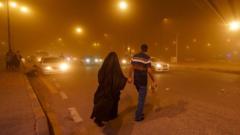
A sandstorm has enveloped Iraq's central and southern regions, leading to a significant health crisis with over a thousand individuals suffering from respiratory problems, according to local health authorities. In Muthanna province, officials reported approximately 700 cases of suffocation, prompting swift medical responses. Footage circulating on social media depicted areas obscured by a dense orange haze, severely hindering visibility and contributing to power outages and flight suspensions in affected areas. Sandstorms are a regular occurrence in Iraq, but experts suggest they are increasing in frequency, potentially due to climate change.Amid the environmental chaos, Iraq's environmental ministry issued a stark warning, highlighting that the nation could expect more frequent "dust days" in the future. As dust clouds swept across the southern provinces, pedestrians and police donned face masks to shield themselves from the harmful particles. Emergency services were dispatched to assist those struggling to breathe.Reports indicate that hospitals in provinces such as Najaf and Diwaniyah received a substantial influx of patients, with Najaf alone admitting over 250 individuals and Diwaniyah treating 322 patients, many of whom were children. In Dhi Qar and Basra, municipalities documented an additional 530 people with breathing difficulties.With visibility dropping to below one kilometer (0.62 miles), authorities in Najaf and Basra were compelled to suspend airport operations. However, local weather forecasts predict an easing of conditions by Tuesday morning.The United Nations has classified Iraq as one of the five countries most susceptible to climate change, as the nation grapples with recurrent sandstorms, soaring temperatures, and dwindling water supplies. Last year's severe sandstorm resulted in one fatality and over 5,000 individuals requiring treatment for respiratory ailments, reinforcing the urgent need for addressing the chronic environmental challenges facing the region.
