In brief
A clash over the rise of cabanas at Australian beaches is sparking widespread debate, as the nation navigates its shared seaside culture against personal needs for beach safety and enjoyment.
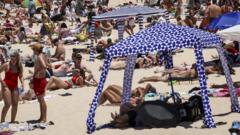
In Australia, the ire over proliferating beach cabanas has become a major talking point, as the influx of large beach tents crowds the coastline and complicates the traditional beach experience. Cabanas, as they are colloquially known, are increasingly seen as more than a convenient way to shield oneself from the harsh Australian sun; they have ignited a turf war that has reached all the way to prime ministerial discussions. Residents of coastal cities express frustration over the sea of polyester covers that clutter the sand and obscure views of the ocean. Claire, a 30-year-old Sydneysider, shares her irritation, saying, "It's chockers [crowded]. They're all over the place." Once known for their soothing spaces, Australian beaches are morphing into competitive zones where securing a patch of sand has become a new kind of challenge. With social media flooded by commentary on the matter, a schism has formed between the cabana supporters—who posit that they are merely seeking refuge from an adversarial sun—and the detractors, who accuse users of monopolizing public spaces. The discussion has even attracted the attention of celebrities and health advocates. Anti-cabana voices have criticized those who set up multiple tents for claiming too much territory. Social media commentator Nic Salerno stated on a talk show, "When you're… polluting the beach with your four cabanas next to each other, where is Guncle [Gay Uncle] Nic going to go?"On the flip side, some argue that sun protection is paramount. Australia's cancer rates, particularly skin cancer, are alarming, prompting a response from organizations like the Cancer Council, which suggests the trend should be embraced. A concerned beachgoer declared, “My partner and I have a cool cabana because we both burn extremely easily and we don't want to die of skin cancer by 30.”The roots of the cabana culture can be traced to Noosa, a coastal town in Queensland, revered for the Cool Cabanas brand. Yet, as some revel in their newfound beach "real estate," expectations of equitable beach access clash with contemporary practices. Presenter Davina Smith candidly admitted that she intentionally stakes out spots early in the day to secure advantage for her family later.Prime Minister Anthony Albanese raised concerns about this encroachment on communal space, remarking that “that's not on” for a country that prides itself on free access to public beaches. His sentiments echo a foundational belief in Australia's cultural identity where the coastlines are seen as egalitarian spaces. However, with a landscape fraught with socio-economic disparities and limited access to coastal areas, the discord between cabana users and the average beachgoer is indicative of deeper issues at play.As discussions unfold, local councils are facing pressure to consider regulations surrounding cabana usage. Calls for limitation on cabana setups and strategic positioning are surfacing, as many argue that a balance must be struck between adequate sun protection and the preservation of shared beach culture. Surfing the line between personal space and public dignity is now a pivotal conversation in Australia's ever-evolving coastal narrative, with advocates urging civility and shared respect at the heart of this summer's disputes. In the backdrop of this increasing tension, the key question remains: How can Australia maintain its idyllic beach culture while accommodating the needs of an evolving population? Without a solution, events like Cabanagate seem far from concluded, leaving Australians to ponder the future of their beloved coastline.