In brief
Since the Taliban regained control of Afghanistan, girls have been barred from education, forcing many into low-wage carpet weaving. Women comprise nearly 90% of the workforce in the booming carpet industry, yet they face intense economic challenges and limited opportunities.
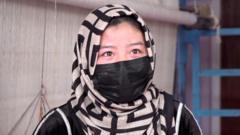
In Kabul's tight-knit carpet workshops, a stark reality has emerged: hundreds of women and girls labor in uncomfortable conditions, weaving carpets to make a living. Nineteen-year-old Salehe Hassani shares her bittersweet determination, "We girls no longer have the chance to study... We turned to the workshop." Since the Taliban's takeover in 2021, an estimated 1.2 to 1.5 million Afghans, predominantly women, have hinged their livelihoods on this traditional craft.As educational institutions remain closed for girls over the age of 12, opportunities for women have severely diminished. The United Nations reported that women's participation in the workforce has plummeted from 19% in 2020 to even lower figures today. Economic collapse compounded by the Taliban's restrictive policies has forced women like Salehe into prolonged, thankless labor.Despite the flourishing carpet export market, which has generated significant income for Afghanistan—carpets worth approximately $8.7 million were exported in the first half of 2024—workers see little of this profit. Many weavers earn less than $1 a day, trapped in a cycle of poverty despite the long hours they put in.Nisar Ahmad Hassieni, who runs a workshop employing around 600 women, stated that although some income is provided, the harsh reality for many workers remains grim. With their livelihoods tied to the carpet industry—which the Taliban permits—these women adapt to survive.The impact of the Taliban's policies is personal and profound. Shakila, 22, recounts how her dream of becoming a lawyer was cut short, leading her to manage her family's carpet production. Alongside her sisters, she navigates the harsh economic landscape after their father withdrew them from school post-trauma from a 2021 bombing at their school.Meanwhile, Samira, who once aspired to be a journalist, grapples with the emotional scars from the attack. She laments the closure of schools and clings to hopes of returning to education, driven by the desire to learn despite the current reality.Yet amidst the struggles, a spark of hope persists. Salehe, determined and motivated, shares her secret of resilience—studying English in her spare time. "Even though schools and universities are closed, we refuse to stop our education," she says, dreaming of building a hospital in Afghanistan one day.As the Taliban maintain a cloud of uncertainty over educational opportunities, Afghan girls continue to seek solace in their art, exhibiting strength and resilience in the face of overwhelming challenges.