In brief
In the heart of the Pilbara, Rio Tinto's Greater Nammuldi iron ore mine showcases over 50 autonomous trucks, reshaping mining safety and productivity while highlighting the evolving workforce dynamics amid automation.
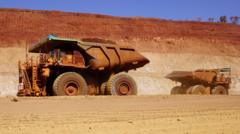
At the remote Greater Nammuldi iron ore mine, located two hours north of Perth, Rio Tinto operates a fleet of groundbreaking driverless trucks that weigh in at a daunting 300 tonnes. This vast mine in Western Australia reflects a significant trend in mining automation, which prioritizes safety and efficiency in an industry known for its dangers.With around 400 workers rotating in and out based on shift patterns, the site boasts a workforce that is flown in for four to eight days before returning home. The mine's expansive layout is traversed by these giant trucks, ingeniously designed to operate on predefined routes without any human drivers.During my visit, I witnessed these massive machines—including a distinctive autonomous water cart dubbed "Henry"—navigate seamlessly alongside human-driven vehicles, only thanks to a high-accuracy GPS system that ensures they operate within a managed virtual space.Safety in this futuristic environment is paramount; every vehicle, human-operated or autonomous, is outfitted with emergency systems and sensors designed to detect obstacles and potential hazards. Rio Tinto's Operations Centre in Perth, situated 1,500 km away, oversees this fleet of over 360 self-driving trucks across numerous mines—a feat that positions Australia at the forefront of mining automation.The journey toward incorporating autonomous technology at Rio Tinto's Pilbara mines began in the late 2000s and has yielded impressive results. Matthew Holcz, managing director, states that safety has drastically improved and productivity has increased by approximately 15%. Though the initial investment in this innovation is substantial, estimated in the billions, it reflects a global movement where the number of self-driving haul trucks has surged in recent years.Contrary to fears over job losses, employment in the mine has adapted rather than diminished. Controllers in the Operations Centre operate multiple trucks, while former truck drivers have transitioned to new roles thanks to reskilling. The automation process has changed the skills needed, but so far, no positions have been eliminated due to robots.Despite the clear benefits, experts like Professor Robin Burgess-Limerick have pointed out the need for more ergonomic design in control interfaces and addressed issues such as potential over-reliance on technology by operators. Moreover, safety concerns remain crucial after recent incidents involving autonomous machinery.Rio Tinto's forward-thinking approach in managing automation marks a significant advancement not only for the company but for the mining industry as a whole. As operations continue to expand and evolve, the expectation for additional autonomy in mining equipment remains high.While waiting for my return flight to Perth amid the complexities of human logistics, it's evident that automation is leading the way into a new era, fundamentally changing how the mining industry functions while highlighting the intricate balance between human and machine collaboration.