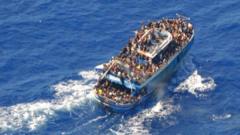
In the early hours of June 14, 2023, a fishing boat overloaded with migrants, known as the Adriana, sank in the Mediterranean Sea, leading to one of the deadliest maritime disasters in recent history. The vessel had left Libya days earlier, carrying an estimated 750 people, including a significant number of women and children. While 82 bodies were recovered, the UN estimates that around 500 individuals are still unaccounted for.
Newly surfaced audio, obtained by Greek media outlet News247.gr, features calls from the Joint Rescue Coordination Centre (JRCC) in Piraeus, Athens. In recordings from June 13, an officer instructs the captain of the stranded boat to inform a nearby vessel that they do not wish to return to Greece, insisting on their desire to reach Italy instead.
Despite denials from the Greek Coast Guard, witnesses from the wrecked vessel have alleged attempts to tow the overcrowded boat, leading to its capsizing, and have claimed that rescuers pressured them to remain silent about the events. The Coast Guard maintains they acted appropriately, stating that rescuers believed the boat was not in distress and voluntarily sought to travel to Italy.
As further scrutiny mounts over the incident, the Greek Coast Guard has stated they provided all relevant evidence to a Naval Court investigation, including the controversial audio. However, human rights organizations, including Amnesty International, have raised serious concerns regarding the integrity of the ongoing investigation, urging for international oversight.
Previous attempts to prosecute individuals blamed for the wreck collapsed when a Greek court deemed it lacked jurisdiction due to the incident occurring in international waters. Legal representatives for those accused have pointed to discrepancies between survivor testimonies and initial accounts presented to the court, with allegations of a cover-up from Greek authorities being at the forefront of discussions.
Human rights lawyer Dimitris Choulis, who has worked on the case, criticized the Greek authorities for attempting to shift blame onto the victims, stating, "They have insulted the memory of so many dead people." As the investigations unfold, calls for transparency and accountability from both national and international bodies continue to grow, spotlighting the ongoing humanitarian crisis in the Mediterranean.
The disaster has brought the global migrant crisis back into focus, emphasizing the risks faced by those seeking safety and the accountability of rescue agencies tasked with their protection.
Newly surfaced audio, obtained by Greek media outlet News247.gr, features calls from the Joint Rescue Coordination Centre (JRCC) in Piraeus, Athens. In recordings from June 13, an officer instructs the captain of the stranded boat to inform a nearby vessel that they do not wish to return to Greece, insisting on their desire to reach Italy instead.
Despite denials from the Greek Coast Guard, witnesses from the wrecked vessel have alleged attempts to tow the overcrowded boat, leading to its capsizing, and have claimed that rescuers pressured them to remain silent about the events. The Coast Guard maintains they acted appropriately, stating that rescuers believed the boat was not in distress and voluntarily sought to travel to Italy.
As further scrutiny mounts over the incident, the Greek Coast Guard has stated they provided all relevant evidence to a Naval Court investigation, including the controversial audio. However, human rights organizations, including Amnesty International, have raised serious concerns regarding the integrity of the ongoing investigation, urging for international oversight.
Previous attempts to prosecute individuals blamed for the wreck collapsed when a Greek court deemed it lacked jurisdiction due to the incident occurring in international waters. Legal representatives for those accused have pointed to discrepancies between survivor testimonies and initial accounts presented to the court, with allegations of a cover-up from Greek authorities being at the forefront of discussions.
Human rights lawyer Dimitris Choulis, who has worked on the case, criticized the Greek authorities for attempting to shift blame onto the victims, stating, "They have insulted the memory of so many dead people." As the investigations unfold, calls for transparency and accountability from both national and international bodies continue to grow, spotlighting the ongoing humanitarian crisis in the Mediterranean.
The disaster has brought the global migrant crisis back into focus, emphasizing the risks faced by those seeking safety and the accountability of rescue agencies tasked with their protection.